


Introduction to DSP Programmatic Advertising
When searching for insights on dsp programmatic advertising, it’s essential to understand its definition, importance, and the evolution it has undergone over the years. A demand-side platform (DSP) is an automated buying platform used by advertisers to purchase ad placements in real time. This technology is crucial because it optimizes advertising budgets, targets specific audience segments efficiently, and enhances the overall impact of digital advertising campaigns.
Programmatic advertising began with the basic premise of automating the ad buying process but has rapidly evolved with the integration of advanced AI and real-time bidding (RTB). These advancements allow advertisers to make instantaneous decisions on where their ads will be most effective. As digital landscapes grow more complex, the importance of DSPs increases, giving advertisers powerful tools to reach their desired audiences more accurately than ever before.
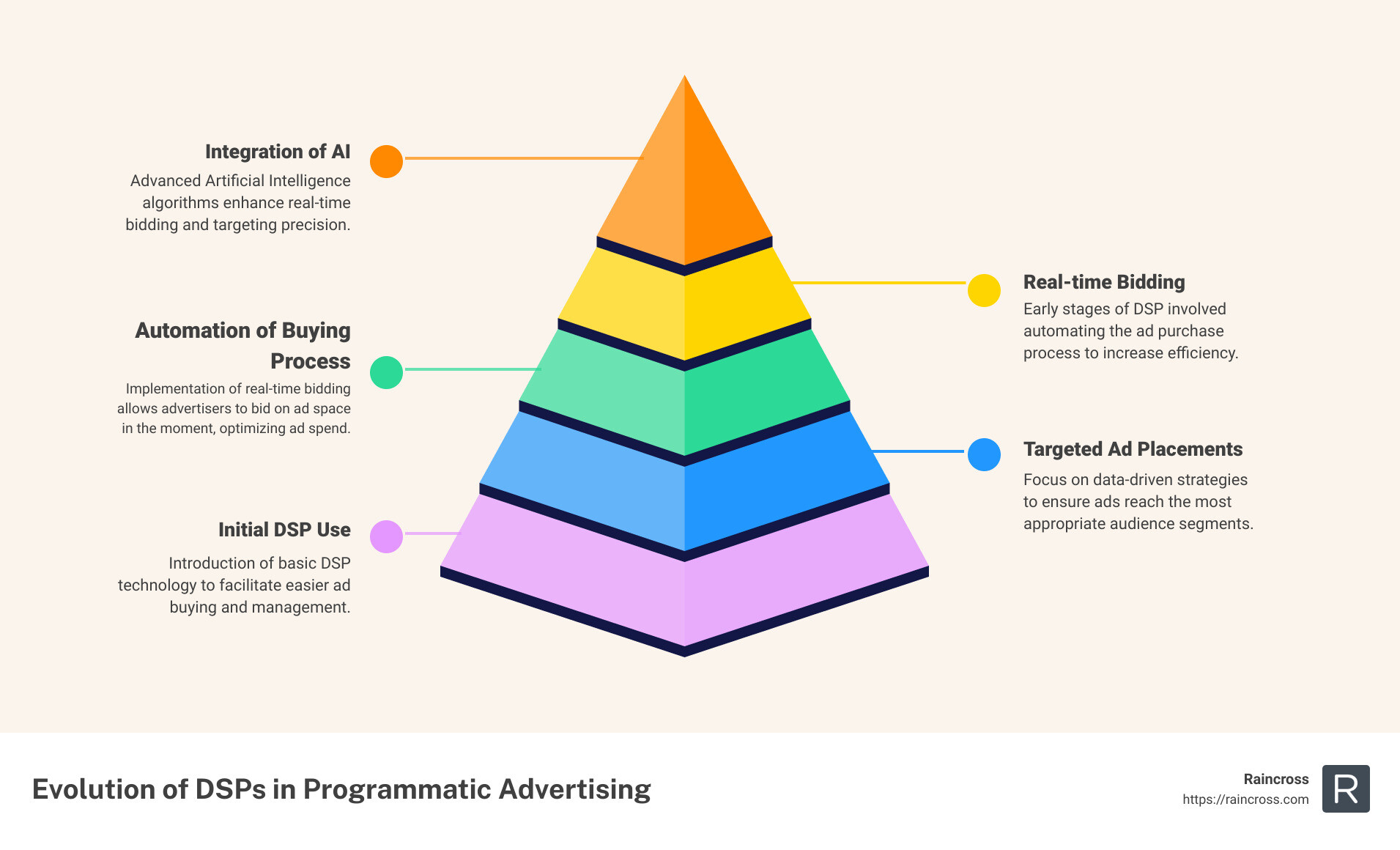
The evolution of DSPs showcases a shift from manual ad buying processes to a highly strategic, data-driven approach that uses sophisticated algorithms to purchase ad space. This transformation is pivotal for businesses aiming to thrive in competitive digital markets by maximizing the relevance and reach of their advertising efforts.
Understanding DSPs in the Context of Programmatic Advertising
What is a DSP?
A Demand-Side Platform (DSP) is a type of software used by advertisers to buy advertising spaces automatically. It connects to various sources of ad inventory, allowing users to purchase ads efficiently and at scale. This technology streamlines the ad buying process by using real-time bidding methods to secure digital ad spaces across multiple platforms.
Functionality of a DSP:
- Automation: DSPs automate the ad buying cycle, from media buying to data analysis.
- Efficient Use of Budgets: They ensure money is spent wisely by purchasing ads that are most likely to perform well.
- Targeting: Advertisers can target audiences based on detailed criteria including demographics, behavior, and more.
- Optimization: DSPs continually adjust campaigns based on performance data to improve results.
How DSPs Transform Advertising
- Automation:
- Before DSPs, buying ads was a manual process involving negotiations and paperwork. Now, DSPs automate these transactions, making ad purchases faster and less prone to human error.
- Efficiency:
- DSPs enhance efficiency by processing vast amounts of data in real time. They make decisions on which ads to buy in milliseconds, ensuring that advertisers get the best available prices and placements.
- Real-time Bidding:
- This feature allows advertisers to bid on ad inventory in real time, providing the ability to purchase ad space on websites as they are being visited. This means that ads are more relevant because they are shown to users based on immediate context and user behavior.
- Targeting:
- With advanced targeting options, DSPs allow advertisers to reach specific segments of users based on detailed criteria. This ensures that ads are shown only to the most relevant audiences, increasing the chances of engagement.
- Optimization:
- DSPs continuously collect data on ad performance and automatically adjust bidding strategies and targeting to optimize ad spend. This dynamic approach to ad placement helps maximize return on investment (ROI).
In summary, DSPs are powerful tools in programmatic advertising, offering automation, efficiency, and sophisticated targeting capabilities. They transform the advertising landscape by making ad transactions faster, smarter, and more effective. This technology not only saves time and resources but also enhances the precision and effectiveness of digital advertising campaigns.
Key Features of DSPs
Understanding the key features of dsp programmatic platforms is essential to harnessing their full potential in digital advertising. These features revolve around inventory access, audience targeting, and real-time analytics, all of which contribute to the efficiency and effectiveness of ad campaigns.
Real-Time Bidding and Its Impact
Real-time bidding (RTB) is a standout feature of DSPs that revolutionizes how ad inventory is purchased. This process occurs in milliseconds, as users visit a webpage. Here’s how it impacts advertising:
- Efficiency: Advertisers can bid on ad space in real time, which means ads are only shown to relevant audiences when they are most likely to engage. This immediate transaction eliminates the need for lengthy negotiations and pre-planning, making the ad buying process much more efficient.
- Cost-effectiveness: With RTB, advertisers can set maximum bids for specific ads, which helps control spending. They only pay what is necessary to win the bid, often resulting in lower overall advertising costs. Additionally, this system reduces wasted ad spend on uninterested audiences.

Integration with Ad Exchanges
DSPs are integrated with multiple ad exchanges, enhancing their capability to access a wide range of inventory and connect with various supply-side platforms (SSPs). This integration is crucial for several reasons:
- Inventory Access: Through connections with multiple ad exchanges, DSPs offer advertisers access to a vast array of digital ad inventories across the internet. This includes premium websites, mobile apps, and digital platforms that might otherwise be inaccessible.
- Audience Targeting: Integration with ad exchanges allows DSPs to utilize detailed audience data from various sources. This data includes demographics, browsing behaviors, and purchase histories, enabling precise targeting that ensures ads reach the most appropriate audience.
- Reach and SSP Connections: By linking with numerous SSPs, DSPs expand their reach, allowing advertisers to place ads on a global scale. This extensive reach is vital for campaigns aiming to impact a broad audience or for businesses looking to expand into new markets.
The combination of these features makes DSPs an indispensable tool in modern digital advertising. They not only streamline the ad buying process but also enhance the strategic aspects of campaign management through detailed analytics and real-time adjustments.
In the next section, we’ll explore how DSPs compare to other programmatic tools like SSPs and ad networks, further highlighting their role and unique advantages in the digital advertising ecosystem.
Comparing DSPs and Other Programmatic Tools
In digital advertising, understanding the different tools and platforms that facilitate ad buying and selling is crucial. Below, we delve into how DSP programmatic tools compare with other significant entities in this space: Supply-Side Platforms (SSPs) and Ad Networks.
DSP vs SSP
Differences:
- Purpose: A DSP (Demand-Side Platform) is designed for advertisers to efficiently purchase ad spaces across various media outlets automatically. In contrast, an SSP (Supply-Side Platform) is used by publishers to manage and sell their ad inventory to the highest bidder.
- Function: DSPs allow advertisers to buy impressions across a wide range of publisher sites targeted to specific audiences based on detailed criteria such as demographics, behavior, and more. SSPs, on the other hand, help publishers maximize the prices of their ad spaces by opening them up to a broader market.
Roles:
- Advertisers use DSPs to automate the purchasing of digital ads and streamline campaign management.
- Publishers use SSPs to connect their ad inventory with the highest paying advertisers through automated auctions.
Interactions:
- DSPs and SSPs interact through ad exchanges where ad impressions are bought and sold in real-time through automated bidding processes known as Real-Time Bidding (RTB).
DSP vs Ad Networks
Evolution:
- Initially, ad networks played the primary role in digital advertising by aggregating ad spaces from various publishers and selling them to advertisers. Over time, the introduction of DSPs has provided advertisers with a more powerful and precise tool to buy ad spaces, thanks to the automation and real-time bidding capabilities.
- DSPs represent an evolution in sophistication from ad networks, offering more direct control over where ads appear and how much is paid for each impression.
Advanced features:
- Targeting and Optimization: DSPs provide advanced targeting options based on real-time data, allowing for more personalized and effective advertising.
- Integration with Data Management Platforms (DMPs): This allows advertisers using DSPs to refine their audience targeting based on richer data sets, including third-party data.
- Transparency and Control: Advertisers have greater transparency over where their ads are placed and the cost associated with these placements when using DSPs. This level of control and insight is typically not possible with traditional ad networks.
Interactions:
- While ad networks aggregate ad space and sell it in bundles, DSPs interact directly with ad exchanges to buy specific ad impressions that meet the advertiser’s criteria, often in real time.
In comparison to SSPs and ad networks, DSPs offer distinct advantages that cater to advertisers looking for efficiency, precision, and control in their advertising campaigns. As we continue to witness advancements in digital advertising technologies, the role and capabilities of DSPs are expected to grow, further distinguishing them from other programmatic tools in the ecosystem.
Top DSP Platforms in Programmatic Advertising
In the evolving landscape of digital advertising, certain DSP programmatic platforms have distinguished themselves by offering unique functionalities and integration capabilities. Let’s delve into three of the top DSPs: Facebook Ads Manager, Google Display and Video 360, and Amazon DSP.
Facebook Ads Manager
Facebook Ads Manager is not just a tool; it’s a powerhouse for advertisers who prefer having control over their ad campaigns. With its self-service platform, advertisers can create, manage, and optimize their campaigns all in one place. This DSP uniquely offers access to its own inventory, including Facebook and Instagram, allowing advertisers to reach a vast audience within these popular networks.
- Self-service: Enables advertisers to have full control over their campaigns.
- Own inventory: Direct access to Facebook and Instagram ad spaces.
Google Display and Video 360
Google Display and Video 360 (DV360) stands out due to its comprehensive cross-channel capabilities, allowing advertisers to manage display, video, TV, and audio ads across multiple platforms from a single interface. This integration with Google’s vast ecosystem, including Google Ads and Analytics, provides a seamless experience for managing large-scale advertising campaigns.
- Cross-channel: Manage various ad formats across different channels.
- Integrations: Seamlessly connects with other Google services for enhanced campaign management.
Amazon DSP
Amazon DSP is particularly beneficial for those looking to leverage e-commerce data to target potential customers effectively. It offers both managed and self-service options, making it accessible for both large advertisers and those new to DSPs. The platform’s strength lies in its ability to use Amazon’s rich shopper data to target ads based on user shopping behaviors and preferences.
- E-commerce targeting: Utilizes Amazon’s extensive data on user shopping habits.
- Managed and self-service options: Suitable for both experienced users and newcomers.
Each of these platforms provides distinct advantages depending on the advertiser’s goals and needs. Whether it’s accessing exclusive inventory on Facebook, leveraging cross-channel strategies on Google, or utilizing e-commerce data on Amazon, these DSPs equip advertisers with powerful tools to enhance their programmatic advertising strategies. Understanding the specifics of each platform will be crucial in selecting the right one for your advertising objectives.
Frequently Asked Questions about DSP Programmatic
What is DSP in programmatic?
A DSP, or Demand-Side Platform, is a type of software used in programmatic advertising that allows advertisers to automate the purchase and management of their ads across multiple ad exchanges, through real-time bidding. This technology enables advertisers to buy ad space efficiently, targeting specific audiences based on data such as demographics, behavior, and location. The goal of a DSP is to optimize the advertising process, making it faster, cheaper, and more effective.
Is Amazon DSP programmatic?
Yes, Amazon DSP is a programmatic advertising platform. It allows advertisers to efficiently reach Amazon shoppers across Amazon’s sites and apps as well as other publishing sites on the web. This platform stands out because it provides access to exclusive Amazon shopper data and audiences, which can be leveraged to target ads more precisely. This includes targeting based on user shopping patterns and behaviors, making it a powerful tool for advertisers looking to tap into the vast Amazon ecosystem.
What is a DSP vs SSP?
Understanding the difference between a DSP and an SSP (Supply-Side Platform) is crucial in the programmatic advertising ecosystem. While a DSP serves the demand side, meaning it helps advertisers buy ad spaces, an SSP is designed for the supply side, helping publishers sell their available ad space. Essentially, DSPs automate the buying process for advertisers, and SSPs automate the selling process for publishers. They work together through ad exchanges to facilitate the buying and selling of ad inventory in real-time, optimizing both pricing and placement to benefit both advertisers and publishers.
Each of these platforms plays a critical role in the efficiency and effectiveness of programmatic advertising. Understanding their functions and differences can significantly enhance how businesses and advertisers strategize their ad placements and achieve better outcomes in their marketing efforts. As we look into more specific platforms and tools, consider these fundamental aspects to make informed decisions in the dynamic landscape of digital advertising.
Conclusion
As we navigate the future of digital advertising, it’s clear that the landscape is continuously evolving. With advancements in AI, machine learning, and data analytics, the capabilities of dsp programmatic platforms are expanding, offering unprecedented precision and efficiency in media buying. The trends we’re seeing point towards a more integrated, automated, and personalized advertising environment where dsp programmatic solutions play a pivotal role.
At Raincross, we are committed to staying at the forefront of these technological advancements. Our approach is not just about keeping pace with industry trends; it’s about leading the charge. We leverage cutting-edge dsp programmatic technology to ensure that our clients can harness the full potential of their advertising efforts. This commitment extends to ensuring compliance with evolving privacy regulations and maintaining the highest standards of data integrity and security.
Looking ahead, we anticipate a few key trends that will shape the future of programmatic advertising:
- Increased Transparency and Control: Advertisers will demand greater transparency and control over their ad spend and placements. This will drive DSPs to offer more detailed analytics and reporting tools, giving advertisers clear insights into the effectiveness of their campaigns.
- Cross-Device and Cross-Platform Marketing: As consumers continue to use multiple devices, cross-device and cross-platform strategies will become even more crucial. DSPs will need to enhance their ability to track and understand user behavior across devices to deliver a seamless advertising experience.
- Greater Emphasis on Privacy: With regulations like GDPR and CCPA setting the tone, privacy will remain a hot topic. DSPs will need to prioritize privacy-compliant practices while still delivering personalized advertising experiences.
- Advancements in AI and Automation: AI will continue to transform how ads are bought, placed, and optimized. DSPs will likely incorporate more AI-driven features to automate processes and make real-time adjustments to campaigns, maximizing ROI for advertisers.
At Raincross, we understand that adapting to these changes requires not only advanced technology but also a deep commitment to our clients’ success. We continuously refine our strategies and tools to ensure that we are providing the most effective and efficient programmatic solutions available.
We invite you to explore how Raincross can enhance your advertising strategies through state-of-the-art programmatic solutions. Discover how we can help you achieve your marketing objectives by leveraging the latest in dsp programmatic technology on our programmatic advertising service page.
As the digital landscape evolves, so do we. Our dedication to innovation and client success ensures that your advertising efforts are not just current but ahead of the curve, setting you up for success in the dynamic world of digital marketing.