


Understanding Media Buyer: Roles and Impact
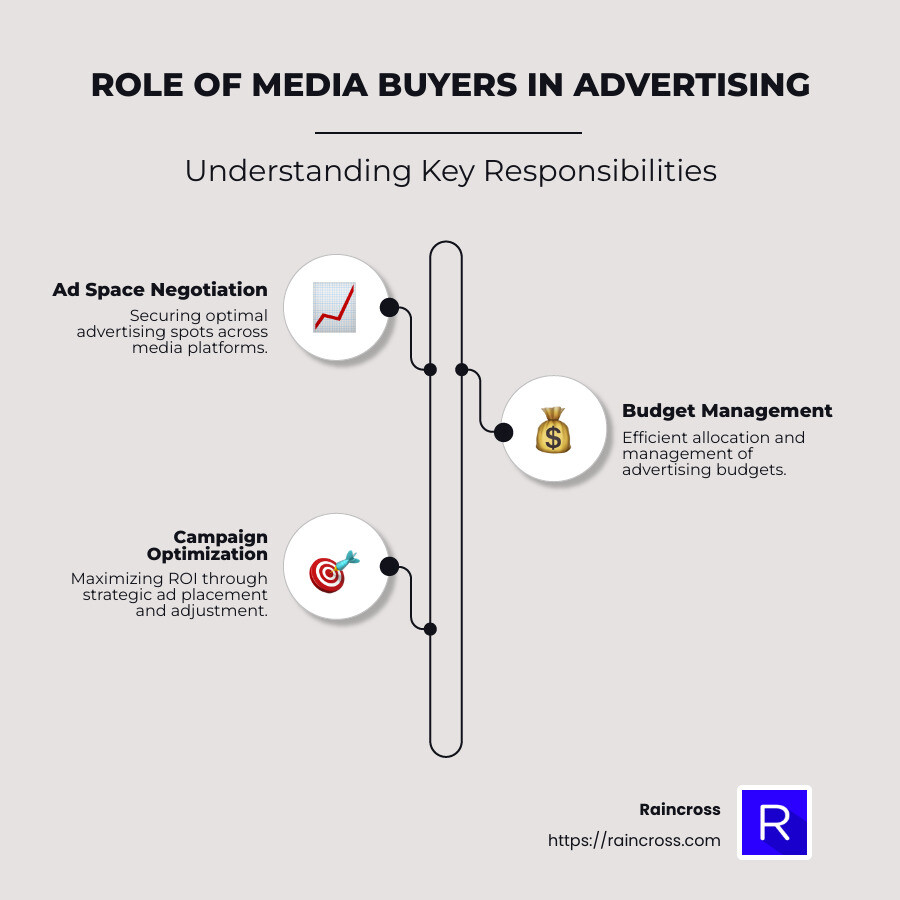
In today’s digital landscape, media buyers play a crucial role in ensuring advertising campaigns are successful. But what exactly does a media buyer do? At its core, the media buyer is responsible for purchasing advertising space across various channels to ensure marketing efforts reach the right audience. Their job involves negotiating ad space, managing budgets, and optimizing campaign performance to maximize marketing ROI.
- Media Buying: The act of purchasing ad spots.
- Marketing ROI: Measures return on investment from marketing activities.
As companies strive to improve their digital marketing footprint and drive measurable business growth, the expertise of media buyers becomes indispensable. They steer the complexities of media planning, seeking the perfect mix of platforms and timing to achieve the best results.
I’m Kevin Watts, founder and president of Raincross, a leader in digital marketing solutions. With years of experience in media buying and other digital strategies, I’m here to guide you through the significant impact a media buyer can have on your marketing success. Let’s explore the details of how media buying can improve marketing ROI.
Media buyer terms simplified:
Understanding the Media Buyer Role
Key Responsibilities
A media buyer acts as a navigator through the vast sea of advertising opportunities, securing optimal advertising space for their clients. This involves a strategic blend of negotiation, ad placement, and budget management.
- Negotiation: Media buyers are adept negotiators, engaging with media outlets to secure the best spots at competitive prices, ensuring the client’s budget is effectively utilized to meet marketing objectives.
- Ad Placement: Post-negotiation, media buyers strategically decide the placement and timing of ads to effectively reach the target audience.
- Budget Management: They meticulously manage advertising budgets to ensure each dollar spent contributes to achieving the desired return on investment (ROI).
Skills and Qualifications
To excel in this role, a media buyer needs a specific set of skills and qualifications.
- Understanding of Marketing Goals: They must fully understand the marketing goals and align their strategies to ensure these goals are met through effective media placements.
- Identification of Target Audience: Recognizing the intended audience for the ads is crucial. Media buyers use data and insights to identify the target audience and tailor their strategies accordingly.
- Knowledge of Media Channels: The media landscape includes various channels like television, print, social media, and digital platforms. A media buyer must be well-versed in these channels to select the best mix for their campaigns.
- Educational Background: Typically, media buyers have a background in marketing, advertising, or communications. Some pursue advanced degrees like an MBA to deepen their expertise.
The Media Buying Process
The media buying process serves as a roadmap guiding media buyers in securing the best advertising ad space for their clients. It involves several key steps and overcoming challenges to ensure that ads reach the target audience effectively. Let’s break it down:
Steps in Media Buying
- Budget Setting: Initially, media buyers decide the budget, determining allocations for guaranteed inventory (specific ad space) or non-guaranteed inventory (flexible ad space at a discount).
- Sending Requests for Proposals (RFPs): Media buyers send RFPs to media outlets, evaluating the proposals to find the best mix of outlets that will deliver the desired results.
- Finalizing Insertion Orders (IOs): After selecting the right media outlets, media buyers finalize the deal by submitting an insertion order, detailing the specifics of the ad placement, including timing and cost.
- Ad Trafficking: This step ensures that the ad creative is properly sized and meets the specifications of the chosen media outlets.
- Campaign Launch: With everything in place, the campaign is launched. Media buyers ensure that the right software and metrics are in place to track the campaign’s performance.
- Continuous Measurement and Optimization: Media buyers monitor the campaign’s key performance indicators (KPIs) closely, making adjustments to optimize underperforming ads.
- Reconciliation: At the campaign’s end, media buyers review ad spending against the original budget and negotiate “make-goods” for any underperforming ads.
Challenges in Media Buying
- Ad Fraud: Media buyers use advanced detection tools to combat ad fraud, ensuring clicks and impressions come from real people.
- Contract Clarity: Ensuring all negotiated terms are clearly stated in contracts is crucial to avoid misunderstandings.
- Campaign Optimization: Access to real-time metrics allows media buyers to make necessary adjustments during the campaign, ensuring optimal performance.
Media Buying Strategies
In today’s advertising world, media buyers have a variety of strategies to choose from. These strategies help them effectively place ads and reach the right audience. Let’s explore some key approaches:
Programmatic Advertising
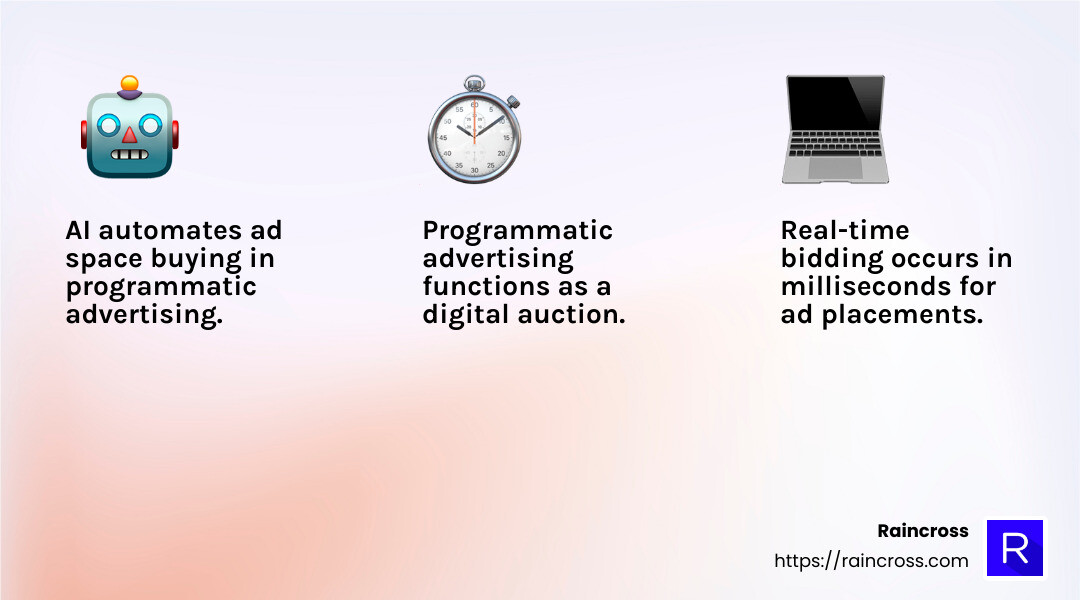
Programmatic advertising is a transformative approach for media buyers. It leverages AI and algorithms to automate the purchasing of ad space. This technology-driven method enables real-time bidding, where ad spaces are bought and sold in milliseconds, akin to a digital auction happening at lightning speed.
Benefits of Programmatic Buys:
- Efficiency: Streamlines the buying process, saving time.
- Precision: Targets specific audiences using data and algorithms.
- Flexibility: Allows for quick adjustments based on performance.
Challenges: Despite its advantages, programmatic advertising requires careful monitoring to avoid ad fraud and ensure ads appear in suitable contexts.
Direct and Manual Buys
While programmatic advertising is gaining traction, direct buys and manual buys remain essential. Direct buys involve negotiating directly with media outlets to secure ad space. This traditional approach is often used for premium placements, like TV spots during prime time.
Direct Buys:
- Control: Provides more control over where and when ads appear.
- Relationship: Fosters strong ties with media outlets, which can lead to better deals.
Manual Buys: These involve hands-on management of ad placements, often used for niche markets or specific events where personalized attention is crucial.
Negotiation Tactics
Negotiation is a crucial skill in media buying. Here are some tactics media buyers use to secure the best deals:
- Value Add-Ons: Offering something extra can enhance the deal. For example, negotiating for bonus ad placements or additional impressions at no extra cost.
- Anchor Establishment: Setting a strong opening offer or “anchor” can guide negotiations in your favor. This is vital when dealing with high-value ad spaces.
- Backup Plans: Always have alternatives ready. If a negotiation doesn’t go as planned, having a backup media outlet ensures your campaign stays on track.
By leveraging these strategies and tactics, media buyers can effectively navigate the complex landscape of advertising, ensuring their clients’ ads reach the right audiences at the right times.
Next, we’ll delve into the latest trends in media buying, including the rise of video marketing and privacy challenges.
Trends in Media Buying
Video Marketing
Video marketing is rapidly becoming the cornerstone of media planning. By the end of 2022, videos accounted for an astonishing 82% of all web traffic. This makes video an essential tool for media buyers aiming to capture audience attention and drive engagement.
Why Video Marketing?
- High Engagement: Videos are more engaging and memorable compared to static ads.
- Wide Reach: With platforms like YouTube and TikTok, video content reaches diverse audiences globally.
- Versatility: Videos can be custom for different platforms, from short clips for social media to longer formats for websites.
Media buyers should focus on integrating video into their strategies to tap into this growing trend. It’s not just about creating content but ensuring it aligns with target market preferences and behaviors.
Mobile Gaming
Mobile gaming has transcended its niche origins to become a mainstream activity enjoyed by all demographics. This shift presents a golden opportunity for media buyers to explore mobile gaming advertising as a viable channel.
Key Insights:
- Audience Loyalty: 70% of mobile gamers would rather give up TV or social media than their games.
- Ad Formats: Use banner ads, interstitial ads, and reward ads to keep brands top of mind.
By leveraging the addictive nature of mobile games, media buyers can create engaging ad experiences that resonate with players, making this a promising avenue for reaching diverse audiences.
Privacy and Measurement
As privacy concerns grow, media buyers face challenges in maintaining accurate measurement while adhering to privacy guidelines. This is where unified measurement and data aggregation come into play.
Unified Measurement: This approach aggregates data from different channels, providing a holistic view of ad performance without compromising user privacy. It ensures that media buyers can still track the effectiveness of their campaigns amidst tightening regulations.
Privacy Guidelines: Media buyers must stay updated on global privacy regulations to ensure compliance. This means being transparent about data collection and usage while finding innovative ways to measure campaign success.
By embracing unified measurement and respecting privacy guidelines, media buyers can steer these challenges effectively, ensuring both compliance and accurate attribution.
As media buying continues to evolve, staying abreast of these trends will be crucial for success. Next, we’ll address some frequently asked questions about the role of media buyers in today’s advertising landscape.
Frequently Asked Questions about Media Buyers
What does a media buyer do?
A media buyer is responsible for purchasing advertising space across various media platforms like television, radio, online, and print. They work closely with media planners to execute ad campaigns that reach the target audience effectively. Their main tasks include negotiating ad placements, managing budgets, and ensuring that ads are displayed at the right time and place to maximize engagement and return on investment (ROI). Media buyers also track and analyze campaign performance to optimize future strategies.
How much can a media buyer earn?
The salary of a media buyer can vary widely based on experience level, location, and the size of the company they work for. Entry-level media buyers can expect to earn around $40,000 to $50,000 per year. With more experience, salaries can rise to between $60,000 and $80,000 annually. Senior media buyers or those in managerial positions may earn upwards of $100,000 or more. Additional factors such as bonuses and commissions can also impact overall earnings.
How to become a media buyer?
To become a media buyer, you typically need a combination of education, experience, and certifications:
- Education Requirements: Most media buyers hold a bachelor’s degree in marketing, advertising, communications, or a related field. This educational background provides the foundational knowledge needed for the role.
- Career Path: Start by gaining experience through internships or entry-level positions in marketing or advertising agencies. This hands-on experience is crucial for understanding the nuances of media buying and building industry connections.
- Certifications: Consider obtaining certifications like the Certified Internet Marketer (CIM) or Professional Certified Marketer (PCM) to demonstrate your expertise and commitment to the field.
- Advanced Education: For those aiming for senior roles, pursuing a master’s degree in marketing or an MBA can improve your skills and career prospects.
By following these steps, you can build a successful career as a media buyer, navigating the dynamic landscape of advertising with confidence and expertise.
Conclusion
At Raincross, we understand that the digital marketing landscape is constantly evolving. Our mission is to provide cutting-edge digital marketing solutions that drive meaningful growth for businesses of all sizes.
Client relationships are at the heart of what we do. We believe in transparency and collaboration, which allows us to tailor our strategies to meet each client’s unique goals and challenges. By fostering these strong partnerships, we can deliver customized solutions that align with our clients’ objectives and help them stay ahead of the competition.
We also know that the role of a media buyer is crucial in today’s advertising world. Media buyers are responsible for securing the best advertising space to maximize engagement and return on investment. At Raincross, we ensure our media buyers are equipped with the latest tools and knowledge to steer this complex landscape effectively.
Through our commitment to innovation and talent, we remain at the forefront of industry trends and best practices. This approach not only improves our service offerings but empowers our clients to achieve sustainable growth and success.
For those interested in learning more about how programmatic advertising can benefit your business, we invite you to explore our comprehensive guide. Find how Raincross can help you redefine your digital marketing strategy and achieve your business goals.