
Team
Kevin Watts

President & Founder, Managing Partner
Kevin leads the strategic direction of Raincross and works across the agency's advertising, strategy, visibility, web, analytics, and public relations disciplines. He is particularly involved in helping clients determine where to invest, how channels should work together, and how emerging technology is changing the way organizations reach and influence their audiences.
Kevin Watts is the founder and president of Raincross, an independent marketing and advertising agency working with organizations across advertising, visibility, web, analytics, strategy, and public relations.
He founded Raincross in 2013, building the agency around the idea that organizations should not have to manage disconnected partners for media, search, technology, strategy, and communications. Today, Kevin helps guide the agency's direction while remaining closely involved in client strategy, media planning, digital advertising, emerging technology, and the continued evolution of how people discover and evaluate organizations online.
Kevin's career in digital marketing began well before Raincross. In 1998, he co-founded the ecommerce retailer Organize.com during the early years of online retail. Over the next 12 years, he helped lead the company's ecommerce and digital marketing efforts as the internet evolved from an emerging sales channel into a central part of how consumers research, shop, and interact with brands. That experience gave him an early perspective on the relationship between technology, consumer behavior, advertising, content, and measurable performance.
That perspective continues to shape his work at Raincross. Kevin is especially interested in the points where disciplines intersect: how paid media influences search behavior, how public relations and authoritative content affect visibility, how websites shape conversion, how analytics changes strategic decisions, and how artificial intelligence is changing the way people find and evaluate information.
Rather than treating new platforms and technologies as isolated tactics, Kevin focuses on understanding how they change the larger marketing environment and where they can create meaningful advantages for Raincross clients. That approach has increasingly included AI optimization, generative search, programmatic media, audience strategy, attribution, and the ways traditional marketing disciplines are converging.
Kevin is originally from Riverside, California, and graduated from the University of Wyoming. Outside of Raincross, he enjoys fly fishing, college football, and spending time with his family.
- 01Marketing Strategy
- 02Advertising Strategy
- 03Media Planning & Buying
- 04Programmatic Advertising
- 05AI Optimization
- 06Digital Strategy
- 07Web Strategy
Capabilities
Selected services
12 pieces
podcast
What Are Your Customers Really Searching For?
Two people can search for the same service while trying to accomplish completely different things. One may be gathering information, another may be comparing companies, and someone else may be ready to make a purchase today. In this episode, Kevin Watts explains search intent
podcast
How Do Digital Ads Find You?
Have you ever researched a product and then started seeing related advertisements across websites, streaming television, podcasts, mobile apps, and digital billboards? In this episode, Kevin Watts explains programmatic advertising and how technology helps businesses reach
October 2, 2026podcast
More Website Traffic Doesn’t Always Mean More Business
Your website traffic is increasing. Your advertising is generating more clicks. But your calls, leads, or sales remain flat, or may even be declining. How can a business attract more visitors without gaining more customers? In this episode, Kevin Watts explains why traffic
September 29, 2026
article
Google’s SAFE System and the Future of AI Content
Google’s SAFE research examines coordinated AI-generated content abuse. Here is what it does, and does not, mean for SEO and your content strategy.
September 28, 20265 min readpodcast
Can ChatGPT Find and Recommend Your Business?
If a potential customer asked ChatGPT to recommend a company like yours, would your business appear, and would the information be accurate? In this episode, Kevin Watts explains how AI platforms discover, understand, and evaluate businesses using information from websites,
September 25, 2026podcast
SEO Isn’t Dead, but It Is Changing
Every few months, someone declares that SEO is dead. But search engine optimization isn’t disappearing, it is evolving. In this episode, Kevin Watts explains how search is changing as Google, AI platforms, social media, videos, reviews, and online communities all influence how
September 24, 2026podcast
What Does It Mean to Be Visible Now?
The way customers discover businesses has changed. Visibility is no longer just about ranking on Google. It now includes search, AI platforms, advertising, social media, reviews, content, and every other place where customers form an opinion about a business. In the first
September 23, 2026
article
Google Is Moving Local Services Ads Into Performance Max: What Advertisers Need to Know
Google is moving Local Services Ads into Google Ads as specialized Performance Max campaigns. Here is what local advertisers need to know about budgets, bidding, reporting and lead quality.
September 10, 20268 min read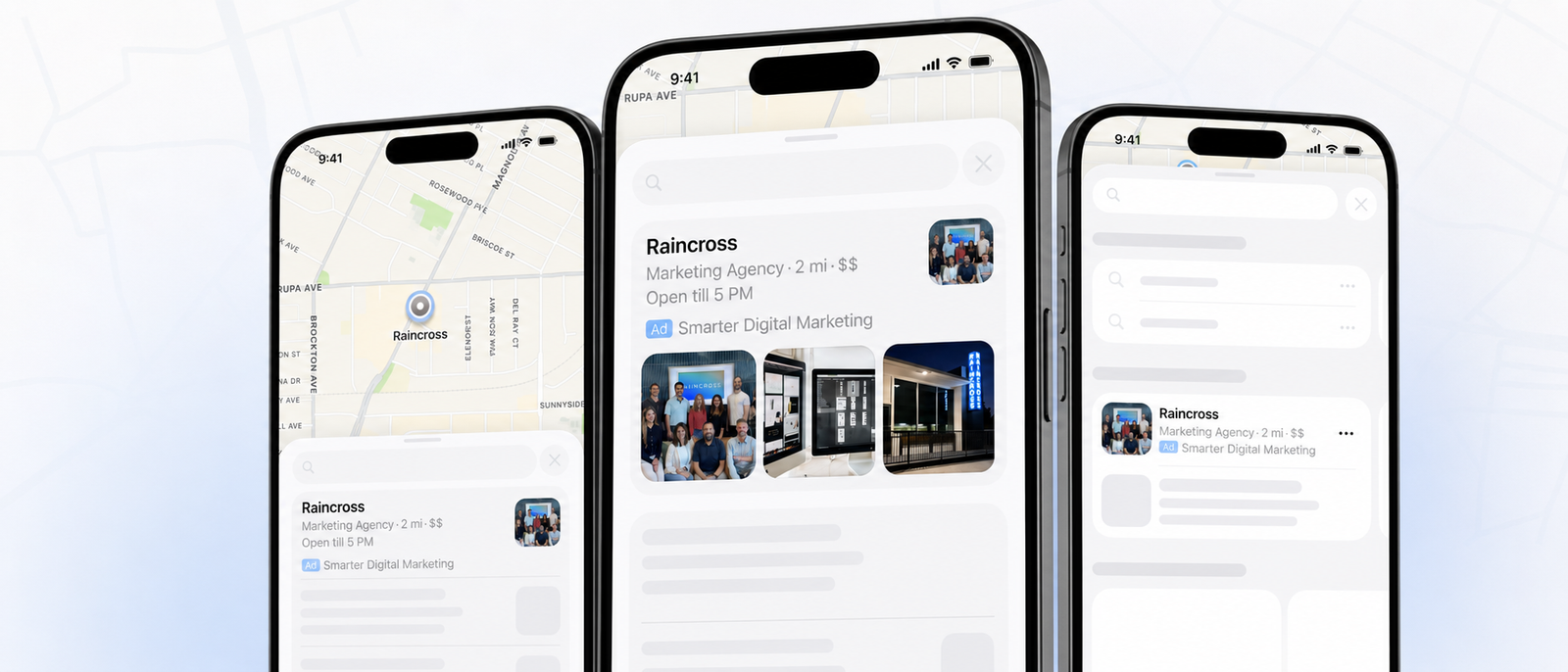
article
Apple Maps Ads Are Now Live
Apple Maps Ads are now live in the United States and Canada. Learn where the ads appear, how they are matched to customers, what businesses are eligible and what steps to take next.
August 26, 20269 min read
article
AI-Created Ads Are Outperforming Human Creative
New research found fully AI-created ads lifted click-through rate 19% over human expert creative, while AI-modified ads did not. The difference is how much creative freedom the system was given.
August 22, 20268 min read
guide
The Guide to Effective Footfall Measurement
Footfall measurement connects advertising exposure to physical location visits. Learn how visit attribution works, which metrics matter, and how to build a credible measurement strategy.
August 20, 202611 min read
article
AI Ads vs. AI Authority
AI-generated ads can scale spend, but they do not build trust. The brands that understand the difference between AI ads and AI authority will own the next decade of marketing.
February 25, 20266 min read