








Be on the shortlist before the specification is written

Raincross helps manufacturers reach engineers, buyers, and operations leaders with technical clarity, durable search visibility, and advertising that respects how long these decisions actually take.

02Our perspective
Pl. 02 / the environment the decision is made in
A five-axis CNC machine cutting a precision metal component

By the time a quote request arrives, most of the evaluation is already finished.

Industrial buyers qualify you before they contact you

An engineer searching for a capability is not looking for a brand story. They are looking for tolerances, materials, certifications, capacity, and evidence that someone has solved a similar problem. If those answers are not visible, the search continues elsewhere and no one tells you.

The buying group makes this harder. Engineering cares about whether it can be built. Procurement cares about cost, terms, and risk. Operations cares about lead time and consistency. Leadership cares about whether the supplier will still be there in five years.

Our work is to make the technical case legible and findable. Capability pages written for the people who read them, search and AI visibility on the precise terms that matter, advertising sized to a long cycle, and measurement that tracks qualified conversations rather than traffic.

03 / What matters

Four conditions of an industrial sale

  1. 01

    Technical credibility

    Specifications, certifications, and process detail carry more weight than claims. The evidence has to be published, not promised on a call.

  2. 02

    Long cycles

    Purchases follow contracts, capital plans, and failures. Presence has to be continuous so you are known before the window opens.

  3. 03

    Buying groups

    Engineering, procurement, operations, and leadership evaluate different risks. One page cannot answer all four, but one site should.

  4. 04

    Channel reality

    Distributors and reps sit between the manufacturer and the buyer. Demand generation has to help the channel rather than compete with it.

Fig. 01

From capability to purchase order

A technical capability only becomes an order after it survives review by people with different definitions of risk. The claim stays constant; the evidence changes by reviewer.

  • Most of this review happens without contact.

  • Published technical detail is what carries the argument in the room.

04Audiences

Four reviewers, one purchase order

  • 01

    Design and process engineers

    Deciding whether the part, material, or system can meet the specification without redesign.

  • 02

    Procurement

    Weighing cost, terms, supplier risk, and whether a second source exists.

  • 03

    Operations and quality

    Judging lead time, consistency, documentation, and what happens when something arrives out of tolerance.

  • 04

    Distributors and reps

    Selling on your behalf, with whatever material and positioning they can find.

05Related services

The work manufacturers usually need.

Interior of a machining plant with equipment and daylight from high windows

Pl. 03 / the proof is in the process

06Selected engagements
Lockheed Martin logo

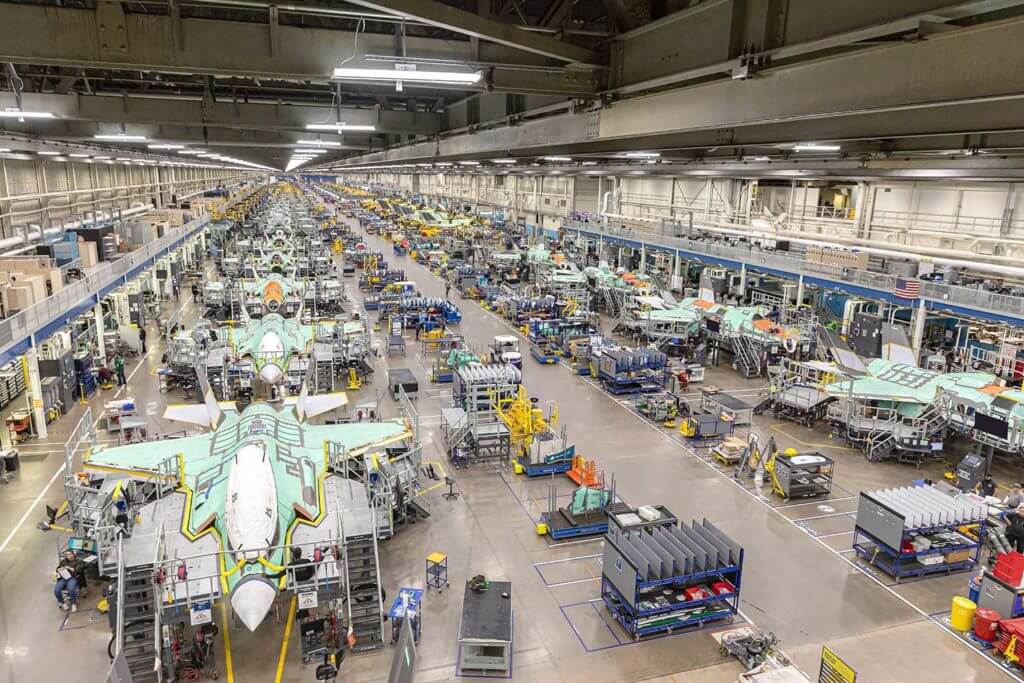
Lockheed Martin's work is highly technical and often tied to programs that cannot be discussed publicly. The public recognizes the aircraft and programs without seeing the engineers, technicians, students, veterans, suppliers, and community partners behind them. The task was to convey that broader impact while respecting the security, legal, and regulatory requirements of the industry.

Manufacturing | Public Relations

1.2B

Media impressions

Manufacturing

Public Relations
Read full story
Aircraft production line inside an advanced aerospace manufacturing facility

Lockheed Martin

01 / 03

07Questions

Questions we are asked by manufacturers.

  • Who are we actually reaching in a manufacturing purchase?

    Rarely one person. An engineer defines the specification, a buyer negotiates it, operations judges whether it will run, and a general manager approves the spend. Each of them looks for different evidence, usually on the same website, so the work has to answer several questions at once.

  • Does advertising work when the sales cycle is a year long?

    It works differently. The purpose is not an immediate order, it is to be one of the two or three suppliers considered when a line goes down, a contract renews, or a program is re-sourced. Continuous presence with targeted reach costs less than trying to appear only at the moment of need.

  • What content matters most for industrial buyers?

    Specifications, tolerances, capabilities, certifications, materials, lead times, and evidence of similar work. Buyers self-qualify before they contact anyone, and a site that hides technical detail simply removes itself from the shortlist.

  • Is search visibility useful for niche components?

    Very. Niche terms have low volume and extremely high intent, and AI assistants increasingly summarize supplier options from technical pages. Being findable and quotable for a precise capability is worth more than broad category traffic.

  • How does this work alongside distributors and reps?

    We treat the channel as an audience. Advertising and content can generate demand that flows through distributors, support reps with usable material, and keep the manufacturer's positioning intact instead of letting it be rewritten downstream.

  • How do we measure performance when deals close offline?

    By tracking quality signals rather than pretending clicks are orders. Quote requests, spec sheet downloads, capability page depth, and sales-qualified conversations, connected to the pipeline where the CRM allows it.

Start here

Tell us what you build and who has to approve it

Send us the capabilities you want known, the buyers you need to reach, and the cycle you are working inside. We will come back with a view of what it would take.

Or call (800) 505-7570