Good analysis starts with good instrumentation
- Capability
- 04 Analytics
- Service
- Analytics Implementation & Tracking
- Typical engagement
- Twelve weeks to first measured read
- Measured on
- Verified outcomes, not impressions
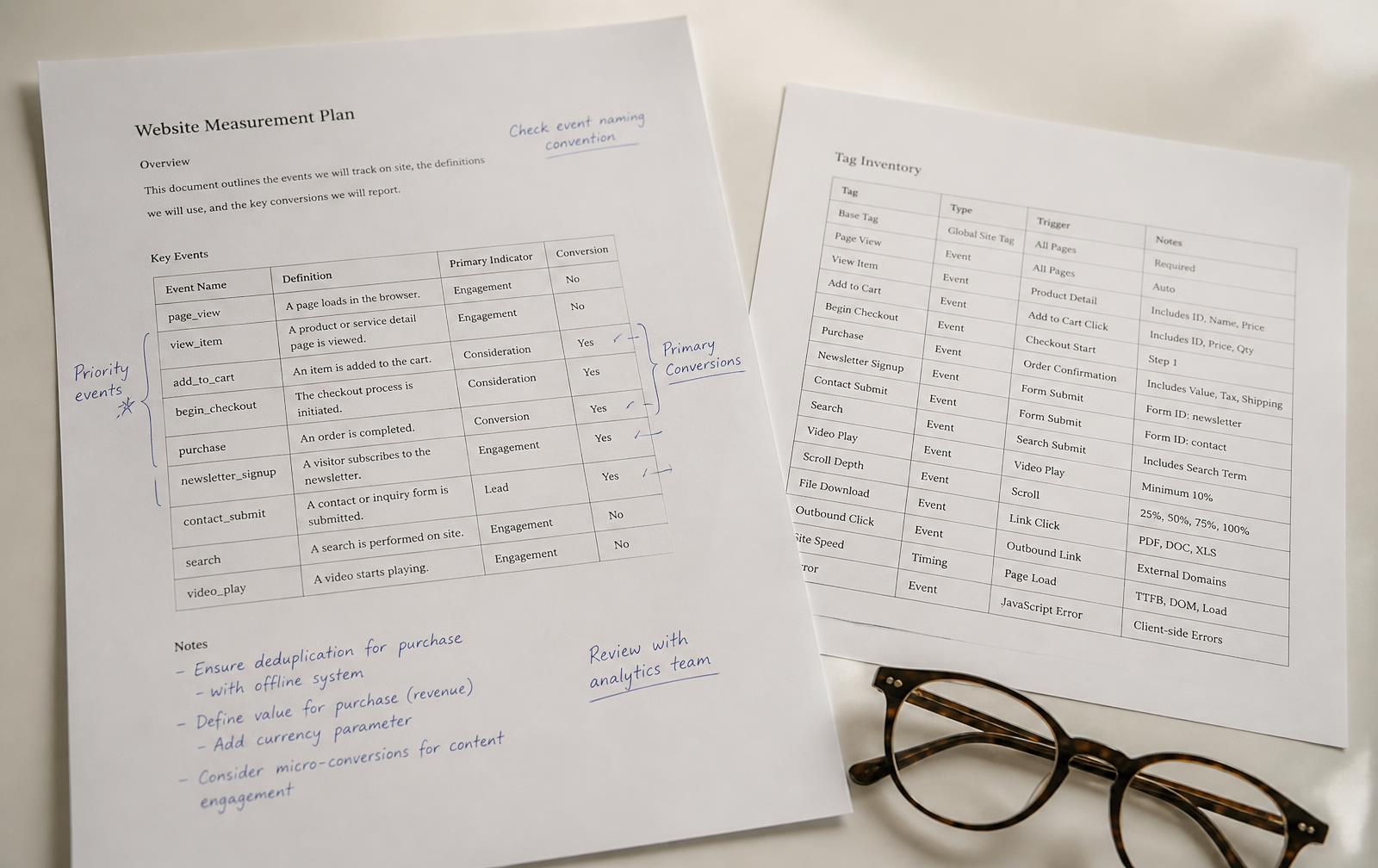
Analytics implementation is the technical layer that decides whether marketing data can be trusted. It covers measurement planning, GA4 configuration, tag management, data layers, event and conversion tracking, advertising pixels, and the testing that proves it all works. When instrumentation is incomplete or inconsistent, no amount of reporting can repair it.
Define
Decide what matters before deciding what to track.
Instrument
Build clean events, tags, data layers, and platform connections.
Validate
Test the complete measurement path before relying on the data.
Monitor
Keep measurement healthy as websites, campaigns, and platforms change.
Selected clients






Meet some of the Raincross experts behind Analytics Implementation & Tracking.
A selection of the specialists who lead and shape this work, supported by a broader multidisciplinary team.




The layer everything else depends on.
Analytics implementation is the work of getting measurement onto a website correctly. It starts by deciding what deserves to be measured, then configures the systems that record it: an analytics platform such as GA4, a tag management layer, a data layer that lets the website describe its own events, conversion tracking for the advertising platforms in use, and integrations with the systems where outcomes actually land. It ends with testing, documentation, and ongoing checks, because measurement is not finished when a tag fires for the first time.
The reason this matters is unglamorous. Almost every frustrating measurement conversation traces back to instrumentation rather than analysis. A conversion counted twice. A form that stopped reporting after a redesign. An event named one way on one template and another way elsewhere. A checkout that fires purchase on a page refresh. Campaign tagging applied inconsistently, so half the paid traffic looks like direct. None of these are analysis problems, and none of them can be corrected in a dashboard.
This page owns the technical collection layer. Deciding what the numbers mean and what to do about them belongs to marketing analytics. Connecting conversions to the sources and campaigns that contributed to them, and interpreting that contribution, is a distinct discipline. Presenting the result in a form people use to make decisions is another. Implementation is the part that determines whether any of those are working from data worth using.
Reporting cannot repair instrumentation that was wrong at collection.
- 0
- stages from inventory through monitoring
- 0
- areas covered in a standard tracking audit
The stack behind the work.
We are platform-independent. Tooling is chosen per engagement, and every account is client-owned.
Google Analytics 4
Looker Studio
- and more...
- Google Ads conversion tracking
- Meta Pixel
- Meta Conversions API where applicable
- Programmatic and Microsoft Advertising tags where in use
- and more...
- Call tracking systems where clients use them
- Ecommerce platforms where relevant
- Form and CRM integrations
- Consent management already in place
- and more...
- A written measurement plan
- Consistent event naming
- Documented tag inventory
- QA after every site release
- and more...
What this work is usually brought in to fix.
Eight failure patterns we see repeatedly, and what we change about each.
- Conversions counted more than once
- A thank you page that can be refreshed, a form tag and a platform tag both firing, or a purchase event triggered on every visit to the confirmation screen. The count looks healthy and the underlying number is fiction.
- Conversions missing entirely
- Phone calls, chat conversations, offline bookings, or a form on one template that nobody instrumented. The channels driving those actions look weaker than they are.
- Tracking that broke after a site change
- A redesign, a plugin update, or a new checkout flow silently removed the element a trigger depended on. Nothing errored, the data simply stopped.
- Events named inconsistently
- The same action carries three different event names across templates, so it can never be analyzed as one thing.
- Too many conversions
- Scroll depth, video plays, and outbound clicks were all marked as key events, which drowns the handful of actions the business actually counts.
- Traffic sources that do not make sense
- Enormous direct traffic, self referrals, payment gateways appearing as top sources, or paid campaigns with no consistent tagging. Attribution is broken before analysis begins.
- Tag containers nobody maintains
- Years of accumulated tags, including pixels for platforms no longer in use, with no documentation of what fires when or why.
- A setup nobody can explain
- The person who built the measurement left, no documentation exists, and changing anything feels risky, so nothing gets fixed.
Where this service earns its place.
If none of these describe the situation, we will say so before a proposal is written.
- 01
Organizations that no longer trust their analytics
Someone noticed the numbers do not add up, and confidence in the whole setup quietly collapsed. The reports still arrive and nobody uses them.
- 02
Businesses launching a new website
A rebuild is the moment measurement either gets designed properly or gets carried over broken. Instrumentation planned alongside development costs far less than retrofitting it.
- 03
Advertisers whose conversion data looks wrong
Ad platforms are optimizing toward conversions that are duplicated, mis-defined, or missing, which means the bidding is learning from bad signals.
- 04
Teams that inherited someone else's setup
An agency, a contractor, or a former employee built it, and nobody currently on the team knows how it works or whether it is complete.
- 05
Ecommerce operations
Product, cart, checkout, and purchase events have to be correct and deduplicated, and revenue reported in analytics needs to reconcile with the store.
- 06
Organizations adding new platforms
A new advertising channel, a call tracking system, or a CRM integration needs to be wired into the existing measurement without duplicating events already being collected.

Measure intentionally, then prove it works
Modern measurement tools make it easy to track nearly everything, which is exactly why so many implementations are noisy and untrustworthy. We start from the other end. Define the business objective, identify the user action that indicates progress toward it, decide what the event should be called and which parameters describe it, and only then decide whether it deserves to be a conversion. One action, one definition, applied consistently everywhere it occurs. After that comes the part most implementations skip. A tag firing in a debug view proves the tag fired. It does not prove the parameters were right, that the event was not also collected by a second tag, or that the number landed correctly in the destination platform. So we debug, then validate against something known, then document what was built and monitor it, because websites change and measurement quietly breaks when they do.
A tag firing is not the same as data being right.
Fig. 02
An event is a name plus its context.
A contact form submission is a user action. The event is the named record that it happened. The parameters describe which form, on which page, and what it was worth. Business meaning is what the organization actually calls it, an inquiry worth following up. Measurement is the count, comparison, and report that follows. Skip the parameters and you get a number with no context. Mark too many events as conversions and the meaningful ones disappear into the total.
One action, one event name, applied the same way on every template.
Diagnostic events are useful context. They are not conversions.
How the work runs.
Seven stages, run in order. Measurement design is agreed before any budget is committed.
What is included.
Scoped per engagement. Most programs use four or five of the capabilities below.
- 01
Measurement planning
Establishing which actions matter and defining each one precisely before any tag is built, so implementation has a specification to work from.
- 02
Analytics and tracking audits
A structured review of existing configuration, tags, events, conversions, and data quality, with a clear account of impact rather than a list of settings.
- 03
GA4 configuration
Property and data stream setup, event architecture, key events, acquisition and referral handling, internal traffic filtering, and retention settings.
- 04
Google Tag Manager
Container structure, tags, triggers, variables, naming conventions, environments, and change governance so the container stays comprehensible.
- 05
Event architecture
A consistent event and parameter model applied across templates, so the same action is always described the same way.
- 06
Data layer implementation
A structured data layer the site populates with business events and their details, working with the development team where code changes are required.
- 07
Form tracking
Reliable submission tracking across native forms, embedded forms, and third party providers, including validation that a real submission occurred.
- 08
Click and interaction tracking
Tracking for the interactions that genuinely indicate intent, such as calls to action, downloads, and outbound clicks, kept separate from conversions.
- 09
Phone call tracking integration
Where a client uses a call tracking system, connecting call outcomes into analytics and advertising platforms so calls are not invisible.
- 10
Ecommerce measurement
Product views, add to cart, checkout steps, and purchase events with the parameters needed for revenue analysis, deduplicated against refreshes and retries.
- 11
Google Ads conversion tracking
Conversion actions, imports, values, and counting settings configured so the bidding optimizes toward the right signals.
- 12
Meta Pixel and Conversions API
Pixel implementation and, where the advertising program justifies it, server side event delivery with deduplication.
- 13
Other advertising pixels
Programmatic, Microsoft Advertising, and other platform tags where they are genuinely in use, deployed through the same governed container.
- 14
Cross domain measurement
Keeping a journey intact when it spans multiple domains or a hosted checkout, rather than restarting attribution mid funnel.
- 15
Referral and source configuration
Referral exclusions, unwanted self referrals, and payment gateway traffic resolved so acquisition data reflects reality.
- 16
UTM governance
A documented tagging convention applied consistently across channels, so campaign analysis is possible without cleanup.
- 17
Consent aware measurement
Configuring tags and platform consent signaling to respect the consent mechanism the client has in place.
- 18
Server side measurement
Where the architecture justifies it, server side collection for control and delivery consistency, implemented as a deliberate choice.
- 19
Tracking QA and debugging
Verifying that events fire, carry the intended parameters, land in the destination, and match a known source of truth.
- 20
Documentation
A written measurement plan and tag inventory, so the setup remains understandable after implementation is finished.
Fig. 03
Data quality is a process, not a setting.
Define, implement, debug, validate, monitor. The loop back matters as much as the sequence. A measurement setup that was correct at launch drifts as templates change, forms are replaced, checkouts are rebuilt, and platforms update their own behavior. Trusted data is the output of maintaining that loop, not a state a project reaches and keeps.
Validation compares against something known, not against the tag itself.
Documentation is what lets the next person change the setup safely.
Not sure your tracking is right
Start with a tracking audit
Give us access to your analytics property, tag container, and ad accounts. We will document what is being collected, what is duplicated, what is missing, and what it means for the decisions you are currently making from that data.
04
Analytics
Good marketing begins and ends with reliable data. Clean instrumentation, honest attribution, and reporting an executive team can defend, established before the spend and revisited after it.
Related thinking.
Writing from the team running this work, published as the field changes.
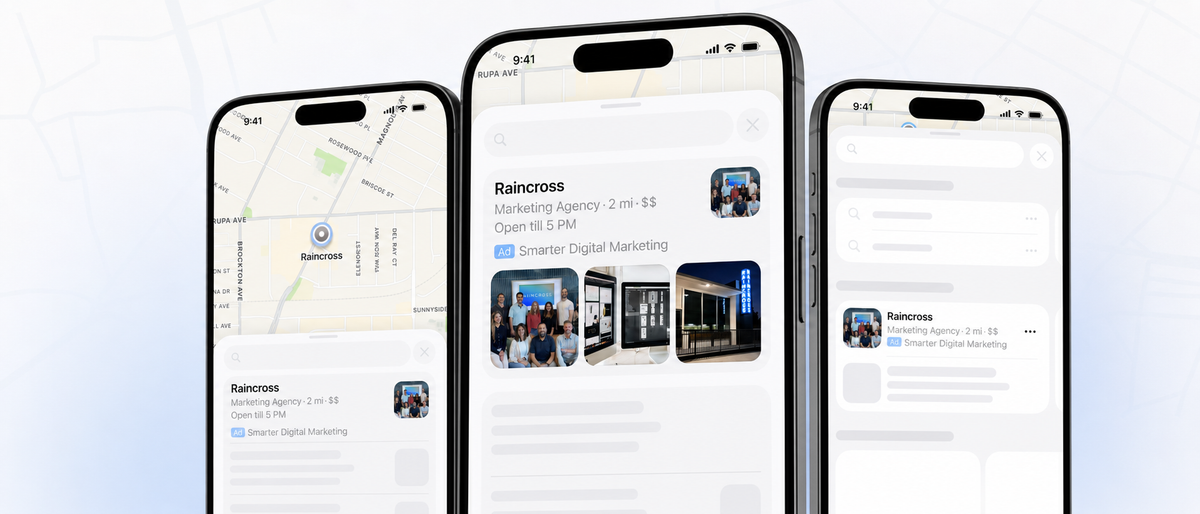
Apple Maps Ads Are Now Live
Apple Maps Ads are now live in the United States and Canada. Learn where the ads appear, how they are matched to customers, what businesses are eligible and what steps to take next.
Aug 26, 2026
- article | 4 min read
Here's What To Know About Google Analytics 4
 May 26, 2022
 - article | 5 min read
How to Make Sure Your Core Web Vitals are Ready for Google’s Algorithm Update
 Nov 30, 2020
 - article | 3 min read
Are The Presidential Polls Wrong?
 Oct 15, 2020
 - article | 5 min read
The Marketing Budget Formula
 May 16, 2019
Common questions.
What is analytics implementation?
Analytics implementation is the technical setup that makes measurement accurate: defining what to track, configuring analytics and tag management, and validating that the data collected is correct.
What is GA4 implementation?
GA4 implementation is configuring Google Analytics 4 for a specific business: base setup, meaningful events and parameters, key events, correct traffic source handling, and validation.
What is Google Tag Manager?
Google Tag Manager is a tag management layer that deploys and organizes measurement tags through tags, triggers, and variables. It delivers analytics, it is not the analytics platform itself.
What is a data layer?
A data layer is a structured place where the website describes what happened in business terms, so measurement tools read one consistent definition instead of guessing from page markup.
What events should a website track?
Track the actions that answer real business questions: forms, calls, appointments, registrations, key downloads, and ecommerce steps. Diagnostic events are useful, but they are not conversions.
What is an analytics audit?
An analytics audit reviews how measurement is set up and whether the data can be trusted, covering GA4 and tag manager configuration, events, conversions, tagging, pixels, consent, and data quality.
How do you know if GA4 is configured correctly?
You verify it: events match the measurement plan, key events reflect real business actions, conversions are free of duplicates, traffic sources look plausible, and the data reconciles with known records.
Why do Google Ads and GA4 report different conversion numbers?
They use different attribution rules, conversion windows, identity signals, and definitions, so a gap is normal. The aim is to understand the difference, not to force the numbers to agree.
What is server-side tracking?
Server side tracking routes measurement through a server you control before forwarding it to platforms. It offers control and consistency, but it is an option, not a fix for privacy limits or attribution.
Does Raincross implement Meta Pixel and Conversions API?
Yes, where Meta advertising is running and it applies. We implement the pixel, add Conversions API with deduplication when the program justifies it, and validate both against the measurement plan.
How do privacy and consent affect analytics tracking?
Consent and privacy rules limit what may be collected, so measurement describes most of the picture, not all of it. We implement consent aware tracking, but we do not provide legal advice.
Analytics implementation and tracking
Find out whether your tracking can be trusted
Tell us what you are running and what you are measuring today. We will review how the tracking is configured, where it breaks, and what it would take to get measurement you can make decisions on with confidence.
Call (800) 505-7570.