Email marketing

The one channel where the audience already said yes

Capability
01 Advertising
Service
Email Marketing
Typical engagement
Twelve weeks to first measured read
Measured on
Verified outcomes, not impressions

Email reaches people who asked to hear from an organization. That permission is the whole advantage, and it is also the constraint. We plan, write, design, segment, send, and measure email so the messages are worth the access they were given, and so the list keeps its value instead of quietly burning down.

Permitted

Every address on the list opted in, knows what it agreed to receive, and can leave in one click.

Relevant

Segmentation is the difference between a message someone was waiting for and one they tolerate.

Deliverable

Authentication, list quality, and honest sending practice come before creative, because an unopened inbox is not a design problem.

Accountable

The channel is judged on what happened after the click, not on the metrics that flatter it.

Selected clients

01What email marketing includes

Five parts of an email program.

Email is often reduced to the newsletter. The newsletter is one format, and it is the one most likely to underperform when the four areas around it were never set up.

  • 01

    Audience and list

    Who is on the list, how they arrived, what they were promised, and how they should be grouped so a message can be relevant.

    • List audit
    • Audience segmentation
    • Behavioral segments
    • Preference management
    • Suppression rules
    • List growth through owned capture
    • List hygiene
  • 02

    Campaign production

    Turning a plan into sends people are glad to receive: the writing, the design, the templates, and the build.

    • Campaign calendar
    • Newsletters
    • Promotional campaigns
    • Email copywriting
    • Email design
    • Template systems
    • Platform build
  • 03

    Automation

    Sequences triggered by something a person actually did, kept small enough to stay accurate and maintained.

    • Welcome series
    • Post purchase follow up
    • Post inquiry follow up
    • Re engagement sends
    • Abandoned cart, where commerce supports it
    • Date and milestone sends
  • 04

    Delivery and technical

    The unglamorous layer that decides whether any of the above is seen at all.

    • Domain authentication
    • Sending reputation practice
    • Bounce and complaint handling
    • Rendering and link testing
    • Form and website integration
    • Platform configuration
  • 05

    Measurement

    Reading what a send produced, and passing that reading into the wider measurement environment.

    • Delivery and bounce reporting
    • Click and segment performance
    • On site action tracking
    • List health and attrition
    • Test results
    • Program reporting
  • Not sure where to start

    Not sure which of these fits your situation? Tell us the goal.

    Start a conversation
02The experts behind the work

Meet some of the Raincross experts behind Email Marketing.

A selection of the specialists who lead and shape this work, supported by a broader multidisciplinary team.

03Overview

What we do when an organization hires us for email marketing

We start with the list and the calendar, because those two things explain most of what is going wrong. Who is on the list, how they got there, when they last engaged, how they are segmented, what they were promised at signup, and what has actually been sent to them over the past year. Alongside that we look at the platform setup, the authentication records, the signup forms on the site, and where email sits relative to everything else in market.

From there the work is production and rhythm. We plan a campaign calendar that matches how much genuinely useful information the organization has, then write and design the sends: newsletters, promotional campaigns, announcements, and the appropriate automated sequences such as a welcome series or a re engagement send. Segments decide who receives what. Templates make the recurring work repeatable without making it stale.

Then we send, test, and read the results. Rendering and link checks before deployment, subject and content tests where the list is large enough to learn from them, and reporting that follows the click through to what happened on the site. List hygiene runs continuously, because removing people who never open protects the delivery of the people who do.

Email marketing sits inside Advertising because that is where channel activation lives. Advertising mostly reaches paid audiences. Email reaches a known one.

Fig. 01Permission to inbox
A subscriber is not a record in a database. Someone showed interest, gave consent that can be withdrawn at any time, and became part of a known audience an organization is allowed to contact. Everything under that path, segmentation, hygiene, preferences, and a working unsubscribe, exists to keep the permission intact. Neglect that layer and the list still grows on paper while the audience quietly stops reading.
04Platforms and technology

The stack behind the work.

We are platform-independent. Tooling is chosen per engagement, and every account is client-owned.

Platforms
  • Mailchimp logoMailchimp
  • Constant Contact logoConstant Contact
  • HubSpot logoHubSpot
  • Klaviyo logoKlaviyo
  • Client's existing platform
  • Platform configuration review
  • and more...
Audience and segmentation
  • List audit
  • Segment design
  • Behavioral segments
  • Preference centers
  • Suppression management
  • List hygiene
  • and more...
Production
  • Campaign calendar
  • Email copywriting
  • Email design
  • Template systems
  • Build and deployment
  • Rendering and link testing
  • and more...
Delivery and measurement
  • Domain authentication
  • Bounce and complaint handling
  • Link tagging
  • Channel reporting
  • On site action reporting
  • Test analysis
  • and more...
05Problems solved

What this work is usually brought in to fix.

Ten failure patterns we see repeatedly, and what we change about each.

The same email goes to the entire list every time
Segmentation never happened, so the message is written for an average subscriber who does not exist, and everyone gets something slightly irrelevant.
Open rates are being reported as the result
Opens stopped being reliable when mail privacy features arrived. A program judged on them can look healthy while producing nothing on the site.
The list has not been cleaned in years
Hard bounces, dead addresses, and subscribers who have not opened in two years are dragging down deliverability for everyone still reading.
Sends are irregular and reactive
Email happens when someone remembers, usually to push a promotion, so subscribers never learn what to expect or why they subscribed.
The emails do not render properly
Image heavy templates, tiny tap targets, and layouts that break on a phone, which is where most of the list is reading.
Nobody set up authentication
The sending domain is not properly authenticated, so a growing share of mail lands in spam and no one can explain the decline.
The signup form promises nothing specific
People subscribe without knowing what they will receive, then treat the first send as unexpected mail, which is where unsubscribes and complaints begin.
Email runs disconnected from everything else
The paid campaign says one thing, the website says another, and the newsletter arrives with a third message on an unrelated schedule.
An automation was built once and abandoned
A welcome series references a product that no longer exists, and it has been sending to new subscribers ever since.
Nobody can say what email is worth
Reporting stops at the click, so the channel is defended with engagement metrics rather than with the actions it produced.

06Who it's for

Where this service earns its place.

If none of these describe the situation, we will say so before a proposal is written.

  • 01

    Organizations with a list they are not using

    Thousands of subscribers were collected over years, the sends are sporadic, and the asset is depreciating quietly.

  • 02

    Businesses with a recurring newsletter to run

    There is a genuine audience and genuine information, and what is missing is the production rhythm to keep it consistent.

  • 03

    Ecommerce operations

    Promotional calendars, post purchase follow up, and segmentation by purchase behavior have direct, measurable revenue attached.

  • 04

    Service businesses with a long consideration cycle

    Inquiries do not convert immediately, and a useful sequence keeps the organization present without pressure.

  • 05

    Organizations with events or seasonal programs

    Attendance, registration, and seasonal demand depend on reaching known people at the right moment.

  • 06

    Teams whose deliverability has slipped

    Sends are landing in spam, engagement has fallen, and nobody has looked at authentication or list quality.

  • 07

    Campaigns that need email planned with paid media

    Advertising is already running, and email should reinforce the same message to people who already know the brand.

  • 08

    Organizations rebuilding their signup path

    Forms, preferences, and the subscriber promise need to be redesigned alongside the website work.

07Our approach

The question we answer before scheduling a send is this worth someone's attention

Most email programs start from the sending calendar and work backwards to a reason. We work the other way. What does this audience gain by opening this message. Who specifically is it for, and who should not receive it. What do we want a person to do after reading it, and is that action available in one obvious click. Is there enough here to justify the interruption, or is this a send that exists because the calendar had a slot. Some months the honest answer is that there is one worthwhile message rather than four, and sending one is better for the list, the reputation, and the results.

A list is a finite resource. Every indifferent send spends a little of it, and no subject line recovers a subscriber who has already decided the sender is not worth opening.

Fig. 02

How a single campaign is built, and what it can produce.

A send starts with a job to do and a defined segment, not with a template. Build, test, and deployment follow, and deliverability sits directly on the path rather than beside it, because an email that does not arrive cannot perform no matter how well it was written. The outcomes at the bottom are all real. Being ignored is information about content or timing, and an unsubscribe is a person telling us something useful about relevance.

What we control: segmentation, message, creative, testing, timing, technical setup, and the fundamentals that support deliverability.

What we do not control: whether a mailbox provider places a message in the inbox, whether it is opened, or whether a subscriber stays.

Opens are treated as a directional signal only, because mail privacy features inflate and distort them.

Testing requires volume. On a small list we test cautiously and avoid drawing conclusions from differences that are noise.

No one can guarantee inbox placement, and we do not price or report as though they can.

Fig. 02Campaign path
08Process

How the work runs.

Eight stages, run in order. Measurement design is agreed before any budget is committed.

09Capabilities

What is included.

Scoped per engagement. Most programs use four or five of the capabilities below.

  • 01

    Email campaign planning

    A calendar built around real information, business objectives, and how often this audience should reasonably hear from the organization.

  • 02

    Newsletters

    Recurring editorial sends with a consistent structure and a reason to exist beyond keeping the brand visible.

  • 03

    Promotional campaigns

    Offers, launches, events, and seasonal sends written to lead to one clear action.

  • 04

    Email copy and content

    Subject lines, preview text, and body copy in the brand's established voice rather than a separate email tone.

  • 05

    Email design and templates

    Reusable, mobile first templates with accessible contrast, real text, and layouts that survive the major email clients.

  • 06

    Audience and list segmentation

    Subscriber groups built from audience definitions, engagement, and behavior, then maintained as they change.

  • 07

    Campaign build and deployment

    Assembly, tagging, personalization, suppression rules, scheduling, and the send itself in the client's platform.

  • 08

    Testing

    Rendering, link, subject line, content, and send time testing, applied where list volume makes the result meaningful.

  • 09

    Nurture and automated sequences

    Welcome series, post purchase or post inquiry follow up, and re engagement sends, kept contained and current.

  • 10

    Subscription and preference management

    Signup paths, preference options, confirmation handling, and unsubscribes that work immediately and are honored everywhere.

  • 11

    List hygiene

    Bounce handling, duplicate removal, inactive suppression, and the routine cleanup that protects delivery for engaged subscribers.

  • 12

    Deliverability fundamentals

    Domain authentication with the web or IT team, sending practice, reputation awareness, and content that does not trip filters.

  • 13

    Website and form integration

    Signup forms, landing pages, and the connections between the site and the email platform, built with the web team.

  • 14

    Performance measurement

    Channel level reporting through to on site action, with the data passed into the wider measurement environment.

  • 15

    Coordination with the wider program

    Email planned alongside paid media, content, and campaign work so a subscriber receives one coherent message.

Fig. 03

What email reports, and where the data goes next.

Email produces a clean chain of signals: whether the message was accepted, whether it was engaged with, what happened on the site afterwards, and whether an action followed. Channel reporting stays in email terms, then feeds the measurement environment Marketing Analytics owns, so email can be read next to paid media, search, and everything else rather than defended in isolation.

Reported: delivery and bounce rates, clicks, click performance by link and segment, unsubscribes, list growth and attrition, and downstream on site action.

Opens are reported as directional context only. Mail privacy features make them unreliable as a performance measure.

Link tagging is set up so email traffic is identifiable in the analytics environment rather than lost in direct traffic.

Test results are reported with their limits stated, including when a difference is too small to act on.

Not used: inflated open rate benchmarks, industry averages presented as targets, or engagement metrics substituted for business outcomes.

Fig. 03Signal path

Before the next send goes out

Send us your last three campaigns

We will tell you what the list, the segmentation, and the results suggest, including whether the problem is the creative or something upstream of it.

10Capability

01

Advertising

Media planned and bought against the buying journey rather than the platform, with direct channels like email activated in the same plan. The focus is measurable performance, not simply placement, so every dollar reads cleanly against revenue.

13Industry applications

Where email marketing ends and something else begins.

Email touches strategy, content, web, and analytics, which is exactly why the boundaries are worth stating plainly.

  • 01

    Email marketing and advertising

    Advertising buys access to audiences that do not know the organization yet. Email communicates with people who already opted in. They live in the same capability because both are channel activation, planned from the same audience thinking and the same calendar, but they are not the same economics and should not be reported as though they were. Where they connect is sequencing: paid media builds the audience, the site converts interest into a subscription, and email carries the relationship from there.

  • 02

    Email marketing and campaign strategy

    Campaign Strategy owns the objective, the audience, the message, the role each channel plays, the sequencing, and the measurement plan. Email marketing executes the email component of that plan. When the strategy exists, email inherits its direction. When it does not, we still run a disciplined channel, but the sends are optimized against channel goals rather than business ones.

  • 03

    Email marketing and content strategy

    Content Strategy owns the broader plan for owned content and the authority it builds over time. Email marketing owns distribution and direct communication. A newsletter often carries content the strategy produced, and email engagement data is one of the more honest signals about which subjects an audience actually cares about.

  • 04

    Email marketing and web development

    Web owns forms, landing pages, integrations, ecommerce systems, and the technical infrastructure behind them, including the DNS records that authentication depends on. Email marketing uses those systems and specifies what it needs from them. We do not rebuild the website through the email platform.

  • 05

    Email marketing and marketing analytics

    Analytics owns the measurement architecture, tracking implementation, and the model that connects marketing activity to outcomes. Email marketing owns channel level reporting and makes sure its traffic is tagged properly so it arrives in that environment identifiable rather than anonymous.

  • 06

    Email marketing and marketing automation

    We build the automated sequences a business genuinely needs and will maintain. We do not sell an enterprise marketing automation or CRM practice, with scoring models, complex lifecycle branching, and sales operations integration. That is a different discipline, and describing what we do as that would be inaccurate.

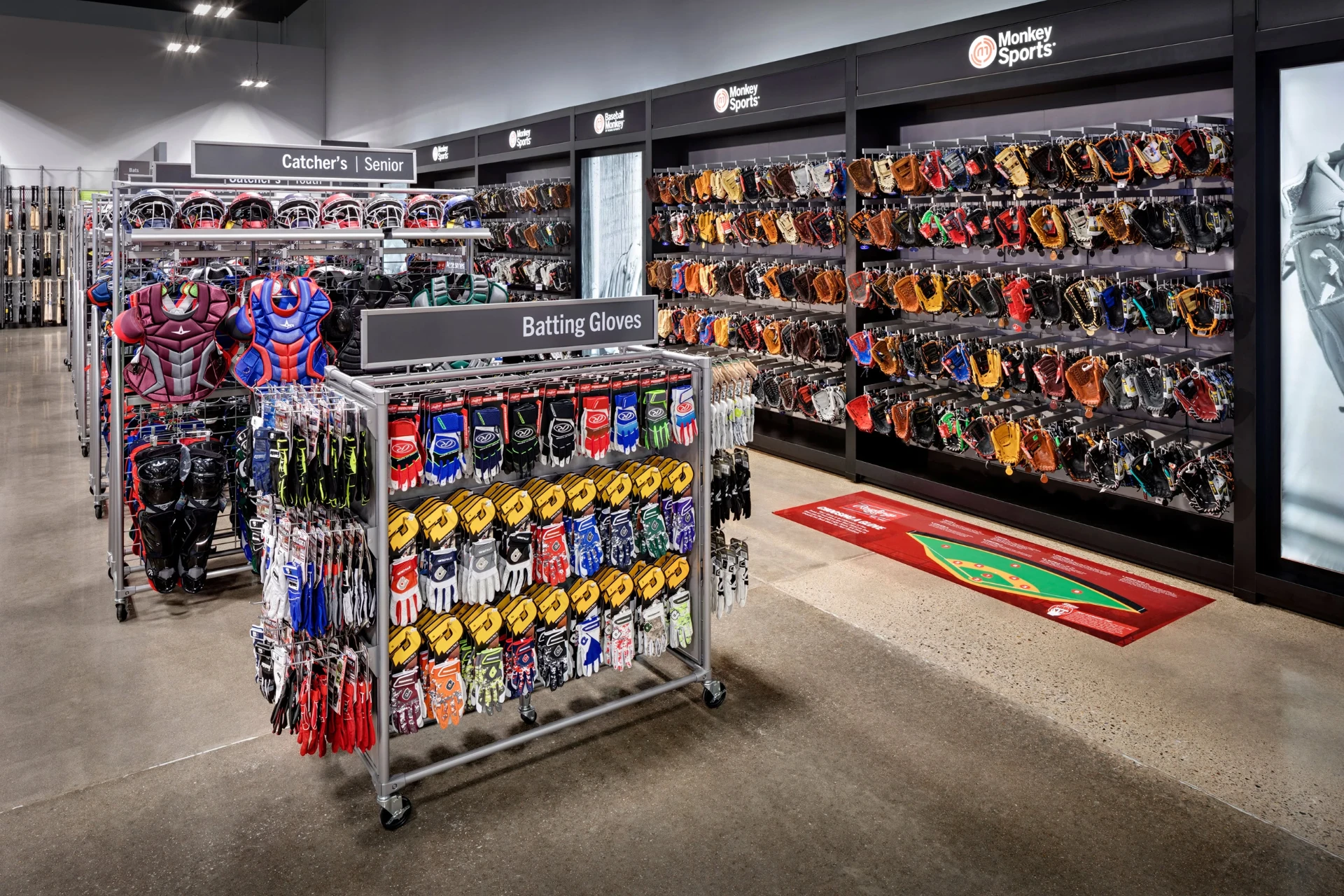
MonkeySports baseball department with batting gloves, catcher's gear, and a wall of mitts

MonkeySports

MonkeySports had to serve two businesses at once: a growing network of retail stores and three specialized online shops, each with a deep catalog of its own. The flagship site had to tie the brand together and still send shoppers in store.

01 Industry

Retail and e-commerce. Web.

02 What we did

MonkeySports had to serve two businesses at once: a growing network of retail stores and three specialized online shops, each with a deep catalog of its own. The flagship site had to tie the brand together and still send shoppers in store.

0

Connected websites in one ecosystem

Read the full case study
14Selected engagements

Proof, with the holdout shown.

View all case studies
In-N-Out Burger logo

Awareness was never the problem. The opportunity was proximity: making it effortless to find a nearby location at the exact moment of the decision. Most of those searches happened on a phone with immediate intent, someone wanting hours, directions, or the closest restaurant, not information about the brand.

Franchises | Advertising

7

High-intent local search patterns targeted

Franchises

Advertising

Read full story
In-N-Out Burger restaurant and neon sign at dusk

In-N-Out Burger

01 / 02

16Questions

Common questions.

  • What is email marketing?

    Email marketing is planned communication sent to a subscribed audience: campaign planning, segmentation, copy and design, deployment, testing, and measurement of what the send produced.

  • Is email marketing part of advertising?

    Email is an owned channel, not paid media. It lives inside Advertising because that capability owns channel activation, so the email calendar is planned alongside paid media rather than separately.

  • What does an email marketing engagement include?

    Campaign planning, segmentation, copy, design, build and deployment, testing, subscription management, list hygiene, deliverability fundamentals, form integration, reporting, and appropriate automated sequences.

  • How is this different from campaign strategy?

    Campaign Strategy sets the objective, audience, message, channel roles, and measurement plan. Email marketing executes the email portion and owns the decisions specific to the channel.

  • How does email marketing use audience strategy?

    Audience Strategy defines who matters and how audiences should be understood. Email marketing translates those definitions into list segments and campaign level targeting.

  • Do you write and design the emails?

    Yes. Copy, design, and reusable templates are part of the service, written in the brand's existing voice and built for how email renders on real devices.

  • What does deliverability mean and do you handle it?

    Deliverability is whether email reaches the inbox. We handle the fundamentals: authentication, list quality, hygiene, honest subject lines, and sending patterns. Inbox placement cannot be guaranteed by anyone.

  • Which email platforms do you work in?

    Commonly Mailchimp, Constant Contact, HubSpot, or Klaviyo, and usually whichever platform the organization already uses. Configuration and discipline matter more than the platform brand.

  • Do you build automated sequences?

    Yes, appropriate sequences such as welcome, post purchase, and re engagement. We do not sell enterprise marketing automation or CRM programs, which are a different discipline.

  • How is email performance measured?

    Delivery, clicks, segment performance, unsubscribes, list health, and the actions taken on the site afterward. Opens are directional only. The data feeds the wider measurement environment.

  • Can you grow our email list?

    Yes, through owned capture: website forms, checkout and inquiry opt ins, event capture, and a clear subscriber promise. We do not buy or rent lists.

  • How often should we send email?

    Frequency should follow the amount of genuinely useful information available. A predictable rhythm plus event driven campaigns works for most organizations, adjusted by engagement patterns.

Email marketing

Permission first. Then the campaign

Campaign planning, segmentation, copy and design, deployment, testing, list hygiene, deliverability fundamentals, and reporting that follows the click to what happened next.

Call (800) 505-7570.