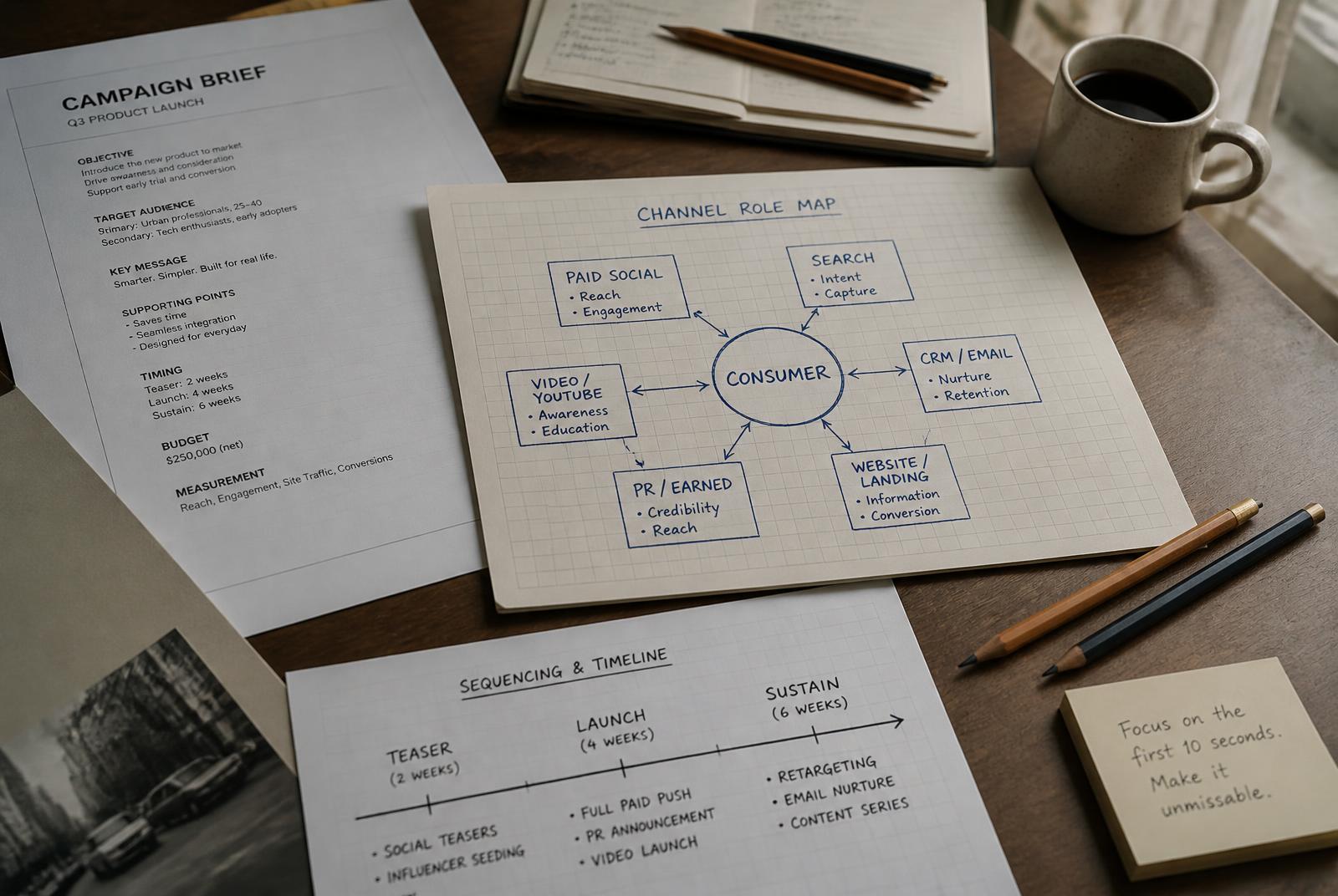
- The campaign started with a channel
- A platform was chosen first and the objective was reconstructed afterward from whatever that platform reports, which makes success hard to define and harder to repeat.
- Parallel activity, not one campaign
- Search, social, display, and the website are all running, each competently, and none of them was designed against the same objective or message.
- Vendors working without a shared framework
- Different partners or internal teams each hold part of the campaign, and no single architecture tells them how the parts are supposed to fit together.
- Inconsistent messages across channels
- The core idea shifts between channels, so audiences encountering the campaign more than once receive a slightly different pitch each time.
- Unclear campaign audiences
- The campaign is aimed broadly, so the message stays general and it is unclear afterward which groups actually responded.
- Traffic sent somewhere that does not continue
- People respond and land on a page that does not carry the campaign forward, leaving them to work out what to do next on their own.
- Awareness judged only by last-click conversion
- Work designed to influence recognition and later response is graded on immediate conversions, which understates it and usually leads to cutting the wrong thing.
- Abundant data, no success criteria
- Every platform reports, dashboards exist, and no one agreed before launch what the campaign was supposed to achieve or what evidence would count.
- An important initiative is coming
- A launch, recruitment effort, enrollment period, event, season, or promotion is ahead, and the architecture should be settled before commitments narrow the options.