Useful information, easier for search engines to find and trust

Capability
02 Visibility
Service
Search Engine Optimization
Typical engagement
Twelve weeks to first measured read
Measured on
Verified outcomes, not impressions

Search engine optimization is the long work of making a site discoverable, understandable, and credible for the searches where it genuinely belongs. It is not a set of tricks, and it is not a promise about position. It is technical quality and useful content, maintained together, until qualified discovery compounds.

A strategist annotating printed crawl reports and site architecture diagrams pinned to a studio wall
0

foundations maintained together for visibility to hold

0

judgements a page passes before a result is shown

0

stages from discovery to continuing optimization

0

day increments, each reported against the baseline

Selected clients

01The experts behind the work

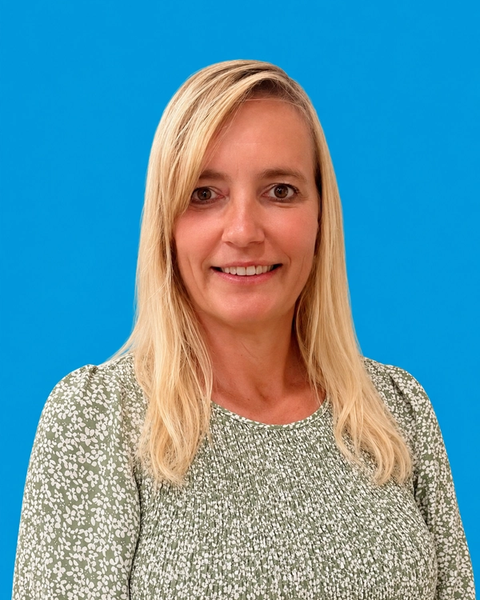
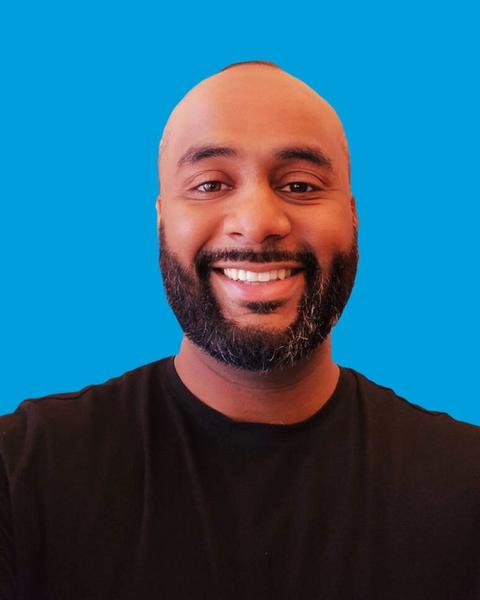
Meet some of the Raincross experts behind Search Engine Optimization.

A selection of the specialists who lead and shape this work, supported by a broader multidisciplinary team.

02Overview

Rankings are a signal. Qualified discovery is the point.

A search engine has one job: given a query, decide which sources are most likely to serve the intent behind it. To do that it has to reach the page, render it, understand what the page is about, work out who published it, and judge whether other credible sources agree. Every part of SEO is an input to one of those steps.

Most sites fail somewhere upstream of content. Pages that never get crawled, templates that render after the crawler leaves, architecture that buries the important pages six clicks deep, or a thousand near-duplicate URLs competing with each other. No amount of writing fixes a discovery problem.

We work the whole chain. Technical accessibility so the site can be read, architecture and internal linking so importance is legible, content built around real search intent rather than volume, structured data so meaning is explicit, and measurement that reports qualified outcomes rather than a screenshot of a ranking tool.

We do not sell positions. We improve the inputs search engines evaluate, and we report the change honestly.

Fig. 01Search discovery pathway
A query becomes a crawl, four judgements, a result, a visit, and then a next action. SEO is work on every step before the click.
0
foundations that have to hold together for visibility to last
0
tests a page is judged on before a result is shown
03Surfaces and sources

Where organic visibility is earned.

Traditional search engines remain the largest organic surface, and the same foundations feed the retrieval layer behind AI answers. Coverage is scoped per engagement.

Search engines

  • Google Ads logoGoogle
  • Microsoft Advertising logoBing
  • DuckDuckGo logoDuckDuckGo
  • Yahoo logoYahoo
  • and more...

Google surfaces

  • Web results
  • Google Maps logoGoogle Maps
  • Google News logoGoogle News
  • Google Images logoGoogle Images
  • Discover
  • and more...

Retrieval and corroboration

  • AI retrieval layers
  • Wikipedia logoWikipedia and Wikidata
  • Industry directories
  • Trade publications
  • Review platforms
  • and more...
04Platforms and technology

The stack behind the work.

We are platform-independent. Tooling is chosen per engagement, and every account is client-owned.

Crawl and technical
  • Screaming Frog logoScreaming Frog
  • Sitebulb logoSitebulb
  • Log file analysis
  • Core Web Vitals field data logoCore Web Vitals field data
  • Lighthouse logoLighthouse
  • and more...
Search and index data
  • Google Search Console logoGoogle Search Console
  • Bing Places logoBing Webmaster Tools
  • Rich results validation
  • Index coverage reporting
  • and more...
Research and visibility
  • SEMrush logoSemrush
  • Ahrefs logoAhrefs
  • Search intent research
  • SERP feature tracking
  • and more...
Analytics and reporting
  • GA4 logoGA4
  • Server-side event collection
  • Looker Studio logoLooker Studio
  • CallRail logoCall tracking
  • and more...
05Problems solved

What this work is usually brought in to fix.

Six failure patterns we see repeatedly, and what we change about each.

The site cannot be crawled or rendered reliably
Blocked routes, client-only rendering, redirect chains, and crawl budget spent on parameters. If the crawler never reaches the page, nothing downstream matters.
Architecture hides the pages that matter
Flat navigation, orphaned pages, and internal links that spread importance evenly. Structure is a signal, and most sites send an unintentional one.
Content targets volume instead of intent
High-volume terms with no commercial relevance, and pages written for a keyword rather than a question. Traffic arrives, qualifies at nothing, and the program looks busy.
Pages compete with each other
Multiple URLs covering the same topic, split by taxonomy accidents or years of publishing. Consolidation usually beats another new page.
No machine-readable meaning
No structured data, no entity clarity, no explicit relationships between services, locations, and people. Search systems are left to infer what should be stated.
Reporting cannot connect to the business
Ranking screenshots and session counts, with no line to qualified enquiries or revenue. Without that line, SEO is impossible to fund with confidence.

06Who it's for

Where this service earns its place.

If none of these describe the situation, we will say so before a proposal is written.

  • 01

    Organizations with real expertise to publish

    If the knowledge exists internally and is not on the site, the gap between the two is usually the largest available opportunity.

  • 02

    Sites carrying years of accumulated change

    Migrations, redesigns, and platform moves leave technical debt that suppresses discovery quietly. Audit work pays back fastest here.

  • 03

    Businesses over-dependent on paid search

    When acquisition stops the moment spend stops, organic discovery is the asset that changes the shape of the cost base.

  • 04

    Teams also investing in AI discovery

    SEO and AI Optimization share technical and content foundations. Running them together avoids paying twice for the same work.

07Our approach

Fix the foundation, then earn the topics that actually convert

We start where discovery breaks, not where reporting is easiest. Crawl, render, indexation, and architecture come first, because content investment on a broken foundation is money spent twice. Then intent research decides what to build, and internal linking decides what gets emphasis.

Search systems increasingly evaluate entities, relationships, authority, and usefulness rather than keyword placement. We work accordingly: clear entities, evidenced claims, and content that resolves the task behind the query.

Fig. 02

What search visibility actually rests on.

Six inputs, none of them sufficient alone. Technical accessibility and architecture make the content reachable, content and linking make it understandable, authority and measurement make it durable.

Content investment on a broken technical foundation is money spent twice.

Visibility compounds while the foundation is maintained, and decays quietly when it is not.

Fig. 02SEO foundation
08Process

How the work runs.

Eight stages, run in order. Measurement design is agreed before any budget is committed.

09Capabilities

What is included.

Scoped per engagement. Most programs use four or five of the capabilities below.

  • 01

    SEO strategy and roadmap

    A sequenced plan tied to commercial outcomes, with the reasoning visible so it can be challenged and funded.

  • 02

    Technical audits and remediation

    Crawlability, indexation, rendering, status handling, canonicalization, and page performance, fixed at the platform level. Run with Technical SEO.

  • 03

    Keyword and search-intent research

    Demand mapped to intent and to the pages that should serve it, including the questions with low volume and high value.

  • 04

    Information architecture and internal linking

    Structure that reflects what the business actually does, with links that concentrate importance where it belongs.

  • 05

    On-page optimization and metadata

    Headings, titles, descriptions, and page structure written for readers and legible to crawlers, without keyword stuffing.

  • 06

    Content audits and recommendations

    Consolidate, refresh, or retire, then commission what is genuinely missing. Delivered with Content Strategy.

  • 07

    Structured data coordination

    Entity, organization, service, and FAQ markup implemented consistently, in step with the Structured Data service.

  • 08

    Authority and link analysis

    An honest read of the current profile, what earns corroboration in your category, and which claims deserve evidence.

  • 09

    Local and market visibility

    Where geography decides the result, coordinated with Local Search rather than duplicated inside this engagement.

  • 10

    Analytics and reporting

    Organic outcomes wired into the same measurement model as the rest of the program, so the contribution is comparable.

Fig. 03

How the work stays in motion.

Research, audit, prioritize, implement, measure, refine. Each pass is reported against the original baseline, and the measurement decides what the next pass works on.

Rankings are reported as a diagnostic signal, never as the objective.

Where a cycle produced no measurable change, the report says so rather than changing the metric.

Fig. 03SEO optimization cycle

Start with the audit

Find out what is actually limiting organic discovery

We crawl the site, read the log and index evidence, and show you where discovery breaks before any content is commissioned. No obligation to run the program afterwards.

10Capability

02

Visibility

Visibility extends well beyond Google. Classical search, generative engines, AI assistants, and local discovery are engineered together, so a brand is answerable to both people and models.

12Markets served

Markets where this work performs.

Representative, not exhaustive. Regulated categories carry exclusion policies we maintain and review.

Close-up of an OctoClean interim carpet cleaning machine treating green office carpet

OctoClean

OctoClean needed to grow its franchise network, but its website was not reaching or educating prospective business owners. Candidates had to understand the opportunity, the support behind it, and what set the model apart from other commercial cleaning franchises.

01 Industry

Franchises. Web.

02 What we did

OctoClean needed to grow its franchise network, but its website was not reaching or educating prospective business owners. Candidates had to understand the opportunity, the support behind it, and what set the model apart from other commercial cleaning franchises.

0%

Increase in website traffic during the engagement

Read the full case study
13Selected engagements

Proof, with the holdout shown.

View all case studies
Regenesis logo

Regenesis had genuine technical authority in bioremediation, but that authority was hard to find. Search visibility trailed the company's standing in the industry, and the traffic that did arrive rarely turned into a request, a download, or a conversation.

Environmental | Visibility

3,759%

Increase in website goal completions

Environmental

Visibility

Read full story
Groundwater monitoring wellheads and injection lines at a remediation site

Regenesis

01 / 02

15Questions

Common questions.

  • What is search engine optimization?

    SEO is the practice of making a website easier for search engines to discover, understand, and trust, so that it appears for searches where it is genuinely a useful result. It combines technical quality, information architecture, content that answers real questions, internal linking, and credible external corroboration. It is a discipline maintained over time, not a one-off project.

  • How long does SEO take?

    Technical corrections can register within weeks because they change what a crawler can reach and render. Content and authority work moves over quarters, because it depends on publication, indexation, and corroboration outside your control. We plan in ninety day increments and report each one against the starting baseline, including the increments where little changed.

  • Is SEO still important now that AI answers questions directly?

    Yes, and for two reasons. Traditional search still carries a large share of commercial discovery, and the same foundations that make a site rank well, crawlability, clear structure, entity clarity, and useful content, are what AI systems retrieve from. Investment in SEO supports both, which is why we run it alongside AI Optimization rather than instead of it.

  • What is the difference between SEO and paid search?

    Paid search buys placement for as long as you fund it, and it can be turned on in a day and off in a minute. SEO earns placement through the quality of the site and its content, takes longer to build, and keeps working when spend pauses. They answer the same demand from different directions, and most programs are healthier with both.

  • What is the difference between SEO, GEO, and AI Optimization?

    SEO improves visibility and performance in traditional search engines. AI Optimization improves broader readiness and visibility across AI-powered discovery systems. Generative Engine Optimization focuses on generative search and answer environments specifically. They share technical and content foundations, but each has a distinct purpose and is measured differently.

  • Can Raincross guarantee rankings?

    No, and any agency that does is describing something it cannot control. Ranking is decided by systems we do not own, against competitors who are also working, on results that vary by person, place, and moment. We commit to the inputs we do control and to honest measurement of what changed after them.

  • What does an SEO engagement include?

    Typically strategy, keyword and search-intent research, technical and content audits, information architecture, on-page optimization, internal linking, metadata, content recommendations, structured data coordination, crawlability and indexation work, page performance, authority and link analysis, analytics and reporting, and continuing optimization. Scope is agreed per engagement rather than sold as a fixed package.

  • How is SEO success measured?

    Against business outcomes first. We report qualified organic traffic, conversions and assisted conversions from organic search, non-branded growth, visibility for the topics that matter, indexation and crawl health, click-through rate, and content performance. Rankings are reported as a diagnostic signal, not as the point of the work.

  • Does SEO require ongoing work?

    Yes. Sites change, competitors publish, search systems update, and technical debt accumulates with every release. Programs that stop maintaining the foundation tend to give back their gains gradually rather than all at once, which makes the decline easy to miss until it is expensive.

Search Engine Optimization

Build search visibility that keeps working

We will audit the foundation, sequence the work by expected effect, and report qualified organic outcomes against the baseline we started from. No guaranteed positions, no vanity traffic.

Call (800) 505-7570. Working with regional and national brands since 1998.