The technical foundation that lets search engines and AI systems confidently understand

Capability
02 Visibility
Service
Technical SEO
Typical engagement
Twelve weeks to first measured read
Measured on
Verified outcomes, not impressions

Technical SEO is the engineering discipline that makes a website easy to discover, crawl, render, interpret, and trust. It is not about manipulating rankings. It is about removing the barriers that keep good content from being found.

0

technical disciplines covered by one engagement

0

steps in the crawl and discovery pipeline

0

stages from audit to ongoing monitoring

0

core inputs to search and AI readiness

Selected clients

01The experts behind the work

Meet some of the Raincross experts behind Technical SEO.

A selection of the specialists who lead and shape this work, supported by a broader multidisciplinary team.

02Overview

Discovery comes before ranking.

Every organic visit starts with a machine reading your website. A crawler has to find the URL, fetch it without error, render whatever JavaScript stands between it and the content, extract meaning, decide the page is not a duplicate, and store it. Only then can ranking or AI retrieval happen at all.

Technical SEO is the work of making each of those steps reliable. Crawlability, indexation, architecture, internal linking, canonicalization, structured data, performance, rendering, mobile usability, accessibility, redirects, and response codes are not separate services. They are components of one engineering discipline.

AI systems benefit from the same clarity. A page that renders reliably, exposes clean structure, and declares its relationships explicitly is easier for a language model to retrieve and interpret, just as it is easier for a crawler to index. The technical investment serves both.


Great content cannot perform if search systems cannot efficiently reach it.

Fig. 01Crawl and discovery pipeline
A page has to be discovered, fetched, rendered, understood, and indexed before ranking or AI retrieval is possible. Technical SEO is the work of making every step upstream reliable.
0
steps between a published page and an indexed one
0
technical disciplines audited in a full engagement
03What the discipline covers

Twenty technical concerns, one foundation.

Technical SEO spans everything between a URL existing and a search system trusting it. These are components of one discipline, not separate engagements.

Discovery layer

  • Crawler discovery
  • Robots and sitemap directives
  • Response codes
  • Redirect chains
  • Crawl budget
  • and more...

Rendering and performance

  • JavaScript rendering
  • Core Web Vitals field data logoCore Web Vitals
  • Image optimization
  • Mobile usability
  • Accessibility
  • and more...

Understanding layer

  • Canonicalization
  • Duplicate prevention
  • Structured data
  • Internal linking
  • URL architecture
  • and more...
04Platforms and technology

The stack behind the work.

We are platform-independent. Tooling is chosen per engagement, and every account is client-owned.

Crawl and diagnostics
  • Screaming Frog logoScreaming Frog
  • Sitebulb logoSitebulb
  • Ahrefs logoAhrefs
  • SEMrush logoSemrush
  • Botify
  • and more...
Index and markup validation
  • Google Search Console logoGoogle Search Console
  • Bing Places logoBing Webmaster Tools
  • URL Inspection
  • Rich Results Test
  • Schema.org validator
  • and more...
Performance
  • Lighthouse logoLighthouse
  • Lighthouse logoPageSpeed Insights
  • Chrome UX Report
  • WebPageTest
  • Core Web Vitals field data logoCore Web Vitals field data
  • and more...
Monitoring and reporting
  • GA4 logoGA4
  • Looker Studio logoLooker Studio
  • Server log analysis
  • Uptime and error monitoring
  • Cloudflare analytics
  • and more...
05Problems solved

What this work is usually brought in to fix.

Six failure patterns we see repeatedly, and what we change about each.

Content is published but never discovered
Pages exist but are never fetched, or are fetched and quietly dropped. Blocked resources, crawl traps, orphan pages, and broken response codes keep content out of the index entirely.
JavaScript hides the content from crawlers
A crawler receives an empty shell because the content only appears after client-side rendering. What the visitor sees and what the search system sees are not the same page.
Duplicate URLs compete with each other
Parameters, pagination, staging URLs, and near-identical templates create multiple versions of the same content. Signals split, and the wrong version gets indexed.
Performance drives visitors away before the page loads
Slow loading, layout shift, and unresponsive interaction cost visitors before content is read, and make large sites more expensive for crawlers to work through.
Architecture obscures what the site is about
Flat hierarchies, weak internal linking, and inconsistent URL patterns hide the relationships between pages, so authority does not reach the pages that need it.
A migration erased years of accumulated visibility
Redesigns and replatforms drop redirects, change URL patterns, and remove markup. Organic visibility falls, and the cause is often found months later.
06Who it's for

Where this service earns its place.

If none of these describe the situation, we will say so before a proposal is written.

  • 01

    Sites with thousands of URLs

    Large catalogs, location networks, and content libraries where crawl efficiency decides how much of the site is ever seen.

  • 02

    Teams planning a migration

    Replatforming, redesigning, or restructuring URLs. Migrations are where most organic visibility is lost, and where planning matters most.

  • 03

    Publishers whose content underperforms

    If the content is strong and rankings are not, the constraint is often technical rather than editorial.

  • 04

    JavaScript-heavy websites

    Client-rendered applications where crawlers and AI retrievers may see something very different from what a visitor sees.

07Our approach

Ranking is earned by content. Discovery is earned by removing

Search engines and AI systems do not reward clever technical tricks. They reward sites that are cheap to crawl, reliable to render, unambiguous to interpret, and consistent over time. That is engineering work, and it is measurable.

We do not chase algorithm rumors. We find the specific technical barriers between your content and the systems trying to read it, then remove them in priority order and verify each fix.

Fig. 02

What search and AI readiness actually requires.

Architecture, performance, accessibility, structured data, and internal linking. Each one removes a category of friction, and together they decide whether a site is readable by search engines and AI systems.

The same foundation supports SEO, generative visibility, and structured data work.

None of these are one-time settings. Templates change, and so does the technical baseline.

Fig. 02Technical foundation
08Process

How the work runs.

Eight stages, run in order. Measurement design is agreed before any budget is committed.

09Capabilities

What is included.

Scoped per engagement. Most programs use four or five of the capabilities below.

  • 01

    Crawlability and crawl budget

    Crawl diagnostics across status codes, redirects, blocked resources, orphan pages, and crawl traps, run against the site as a search engine actually experiences it.

  • 02

    Indexation and canonicalization

    Indexation analysis, canonicalization, duplicate content prevention, XML sitemaps, and robots directives so the right pages are indexed and the rest are not competing with them.

  • 03

    Information architecture and internal linking

    URL architecture, site hierarchy, and internal linking that distribute authority and make topical relationships legible to both crawlers and readers.

  • 04

    Performance and Core Web Vitals

    Core Web Vitals work, page speed optimization, image optimization, and delivery improvements measured in the field rather than in a lab score.

  • 05

    JavaScript rendering and mobile usability

    Verifying that client-rendered content is retrievable, that critical markup survives hydration, and that mobile rendering matches what visitors see.

  • 06

    Structured data implementation

    Schema implementation and validation so services, locations, people, and content types are declared explicitly rather than inferred.

  • 07

    Accessibility and semantic structure

    Accessibility improvements that also improve machine readability: semantic structure, heading order, descriptive labels, and predictable navigation.

  • 08

    Migrations, redirects, and log analysis

    Redirect strategy, HTTP response code hygiene, migration planning, and log-file analysis where server logs are available.

Fig. 03

Technical SEO is an ongoing engineering practice.

Audit, prioritize, implement, validate, monitor, improve. Websites ship changes constantly, so technical quality is maintained rather than completed.

Every fix is validated before it is reported as complete.

Monitoring catches the regressions that arrive with the next template release.

Fig. 03Continuous optimization cycle

Start with diagnostics

See what search engines actually see

We crawl the site as a search engine does, then document every barrier between your content and the systems trying to read it.

10Capability

02

Visibility

Visibility extends well beyond Google. Classical search, generative engines, AI assistants, and local discovery are engineered together, so a brand is answerable to both people and models.

12Markets served

Markets where this work performs.

Representative, not exhaustive. Regulated categories carry exclusion policies we maintain and review.

Sunlit citrus grove with ripe oranges on the branch

Citrus Heritage Escrow

Escrow is a decision made quickly and rarely. Buyers, sellers, and agents look for a company at the exact moment a transaction is moving, and whoever answers the question first usually gets the call. Citrus Heritage Escrow had the reputation locally but not the search presence, so the searches that mattered most were being answered by someone else.

01 Industry

Real estate. Visibility.

02 What we did

Escrow is a decision made quickly and rarely. Buyers, sellers, and agents look for a company at the exact moment a transaction is moving, and whoever answers the question first usually gets the call. Citrus Heritage Escrow had the reputation locally but not the search presence, so the searches that mattered most were being answered by someone else.

0%

Increase in website sessions

Read the full case study
13Selected engagements

Proof, with the holdout shown.

View all case studies
MonkeySports logo

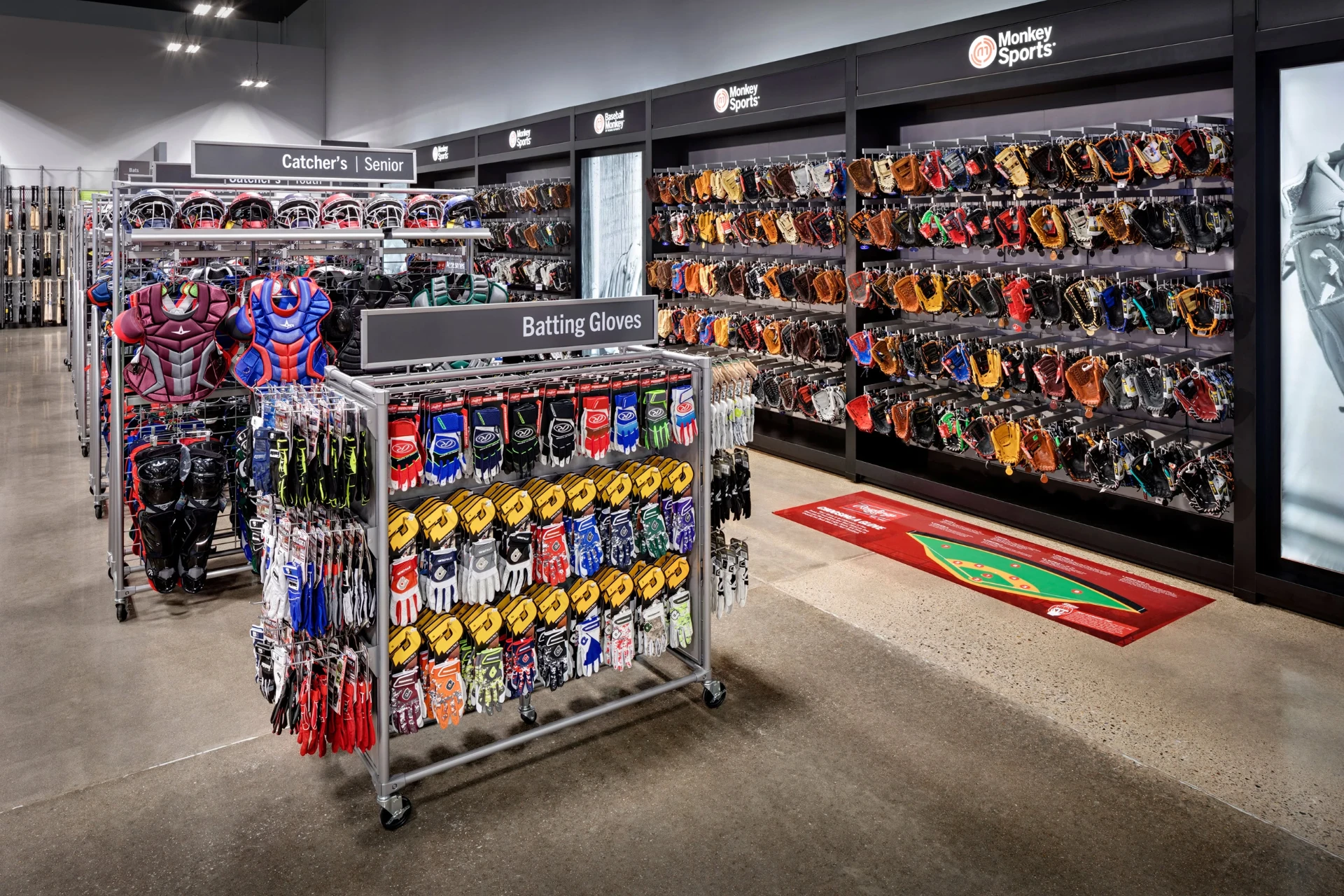
MonkeySports had to serve two businesses at once: a growing network of retail stores and three specialized online shops, each with a deep catalog of its own. The flagship site had to tie the brand together and still send shoppers in store.

Retail and e-commerce | Web

4

Connected websites in one ecosystem

Retail and e-commerce

Web

Read full story
MonkeySports baseball department with batting gloves, catcher's gear, and a wall of mitts

MonkeySports

01 / 02

15Questions

Common questions.

  • What is technical SEO?

    Technical SEO is the engineering discipline that makes a website easy for search engines and AI systems to discover, crawl, render, understand, and trust. It covers crawlability, indexation, site architecture, internal linking, canonicalization, structured data, performance, rendering, and accessibility.

  • How is technical SEO different from SEO?

    SEO is the broader practice of earning organic visibility, including content and authority. Technical SEO is the engineering layer that determines whether search systems can reach, render, interpret, and index those pages correctly.

  • How often should a technical SEO audit be performed?

    A comprehensive audit is usually appropriate once or twice a year, with lighter monthly checks and continuous monitoring. Migrations, redesigns, and sudden changes in crawl or index coverage should trigger an audit as well.

  • Does page speed affect SEO?

    Yes. Speed is one signal among many, and its larger effect is on user behavior and crawl efficiency. Slow pages lose visitors before content loads and make large sites more expensive to crawl.

  • What are Core Web Vitals?

    Core Web Vitals are Google's field measurements of loading performance, interaction responsiveness, and visual stability: Largest Contentful Paint, Interaction to Next Paint, and Cumulative Layout Shift. They reflect what real visitors experience.

  • Can technical SEO improve AI visibility?

    Yes, it helps. AI systems retrieve content from the web, so pages that load reliably, render correctly, and expose clear structure are easier to interpret. Technical work does not guarantee inclusion in AI answers, but technical barriers reliably prevent it.

  • Does technical SEO include structured data?

    Yes. Structured data implementation and validation are part of technical SEO because markup is code that must be correct and maintained. Deeper entity and schema strategy is handled by our structured data service.

  • How is technical SEO measured?

    Through crawl health, indexation against intended pages, crawl efficiency, rendering success, Core Web Vitals, structured data validity, and the reduction of open technical errors, read alongside organic sessions and conversions.

  • Is technical SEO a one-time project?

    No. Websites change constantly through new templates, content, platform updates, and migrations, and search systems change how they crawl and render. An audit fixes today's issues, monitoring catches tomorrow's regressions.

Technical SEO

Start with a technical audit

We will crawl your site the way a search engine does, document what blocks discovery, and give you a prioritized engineering plan with the impact of each fix.

Call (800) 505-7570. Working with regional and national brands since 1998.