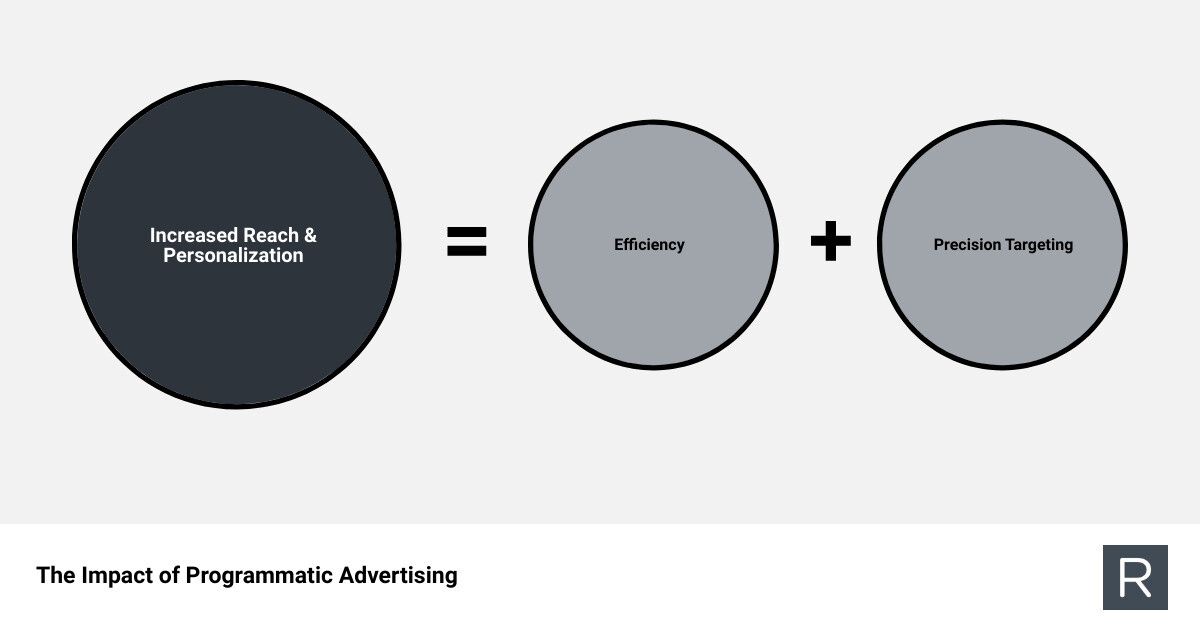
Programmatic is the buying layer beneath most modern media. Done badly it is cheap reach with no accountability. We run it as an auction discipline: curated supply, audience quality over impression count, and a bid that answers to revenue.
Traditional media buying negotiates a placement in advance: a site, a daypart, a rate. Programmatic negotiates every impression in an auction, in real time, against what the buyer knows about the person and the page.
That difference is only an advantage if the buyer has something worth knowing. Without audience quality, supply discipline, and an outcome to bid against, real-time buying just finds the cheapest impressions on the open web faster than a human could.
We treat the auction as the place where strategy is expressed. Curated inventory, transparent supply paths, household frequency control, and bids priced against modeled value rather than a flat CPM target.
Every seat, contract, and data asset stays in the client's name. We operate it, you own it.
Fig. 01Auction path
A bid request is scored against audience, context, and supply quality before a price is set. Everything downstream is the consequence of that scoring.
0%
median share of spend recovered from low-quality supply
0
consolidated frequency ceiling across display, video, and audio
04Platforms and technology
The stack behind the work.
We are platform-independent. Tooling is chosen per engagement, and every account is client-owned.
Demand-side platforms
Basis
The Trade Desk
DV360
StackAdapt
Amazon DSP
Yahoo DSP
and more...
Data and identity
LiveRamp
First-party CRM onboarding
UID2
Contextual providers
Clean room matching
and more...
Verification and measurement
IAS and DoubleVerify
Peer39
Geo holdout testing
GA4
Looker Studio reporting
and more...
05Problems solved
What this work is usually brought in to fix.
Six failure patterns we see repeatedly, and what we change about each.
Cheap reach mistaken for efficiency
A low CPM usually means low-value inventory. We price against outcome value, then let the CPM land where the auction puts it.
Opaque supply paths
Most open-exchange spend passes through resellers before it reaches a publisher. We use supply path optimization and log-level data to buy the shortest route.
Made-for-advertising inventory
Ad-dense sites built to absorb programmatic budget. We maintain inclusion lists and review new domains weekly rather than blocking after the fact.
Frequency that compounds across channels
Display, video, and audio bought separately hit the same household repeatedly. We cap at the household across every line in the program.
Black-box managed service
Bundled buying hides the margin and the decisions. We run client-owned seats with the fee stated separately from media.
Reporting without a counterfactual
View-through conversions credit almost everything. We hold out geographies or audiences so the reported lift is a measured difference.
06Who it's for
Where this service earns its place.
If none of these describe the situation, we will say so before a proposal is written.
01
Brands scaling beyond search and social
Teams that have saturated intent channels and need incremental demand without abandoning accountability.
02
Considered-purchase categories
Long cycles where the buying committee is reachable long before a query is typed.
03
Multi-location and regional advertisers
Programs that need a national buying framework applied to uneven local demand.
04
Advertisers leaving a bundled vendor
Organizations moving from an opaque managed service to client-owned seats and transparent fees.
05
Teams with first-party data to activate
CRM, subscription, or transaction data that has never been used as a buying signal.
06
Categories with tight compliance rules
Healthcare, finance, and public sector programs that need documented exclusions and verified placements.
07Our approach
We bid against value, not a rate card
Every impression is worth something different, and most are worth nothing. The work is deciding which ones are worth paying for and how much, then proving the decision was right with a holdout rather than a dashboard.
In practice: curated supply first, audience second, creative sequenced to the stage of the relationship, and a weekly review that cuts inventory rather than diluting it.
Fig. 02
How data moves through the program.
Signal is collected, identity is resolved, the model assigns credit, and the next allocation follows from it. The loop feeds itself.
The model is the part we own. Everything else is plumbing.
Fig. 02Collect, resolve, model, decide
08Process
How the work runs.
Eight stages, run in order. Measurement design is agreed before any budget is committed.
09Capabilities
What is included.
Scoped per engagement. Most programs use four or five of the capabilities below.
01
Curated supply and PMPs
Private marketplaces, direct deals, and inclusion lists assembled per program and reviewed monthly.
02
Supply path optimization
Log-level analysis of resellers and hops, so budget reaches publishers by the shortest path.
03
Audience modeling
First-party data, contextual signals, and modeled lookalikes combined into segments with a stated hypothesis.
04
Cross-format sequencing
Display, online video, connected TV, native, and streaming audio bought under one frequency ceiling.
05
Dynamic creative
Message and offer variation by audience, geography, and stage, tested continuously rather than annually.
06
Brand safety and verification
Pre-bid controls plus post-bid verification, with category exclusions documented for regulated clients.
07
Incrementality testing
Geo holdouts, matched markets, and PSA control cells that produce a defensible lift number.
08
Seat and data governance
Client-owned platforms, portable audiences, and log-level access retained by the client.
Fig. 03
What reporting looks like.
One index for the program, three standing indicators beneath it. No vanity metrics, no screenshots of a platform dashboard.
Fig. 03Program index and standing indicators
Talk it through
Ask us what your media is actually buying.
Send a recent programmatic report. We will tell you what share of it reached a real publisher, and what it would take to prove the rest worked.
Media planned and bought against the buying journey rather than the platform, with direct channels like email activated in the same plan. The focus is measurable performance, not simply placement, so every dollar reads cleanly against revenue.
Police recruitment competes with every other employer for the same small pool of people who are willing and eligible to serve. Job boards reach candidates who are already looking. The department needed to reach the ones who were not, hold their attention long enough to consider the badge, and do it inside a two-month window with open positions waiting to be filled.
01 Industry
Government & Public Sector. Advertising.
02 What we did
Police recruitment competes with every other employer for the same small pool of people who are willing and eligible to serve. Job boards reach candidates who are already looking. The department needed to reach the ones who were not, hold their attention long enough to consider the badge, and do it inside a two-month window with open positions waiting to be filled.
Pechanga competes for discretionary time against every other entertainment option a household can choose from the sofa. Broad awareness buying reached people, but it could not prove which impressions moved anyone toward a booking, a visit, or a reservation inquiry.
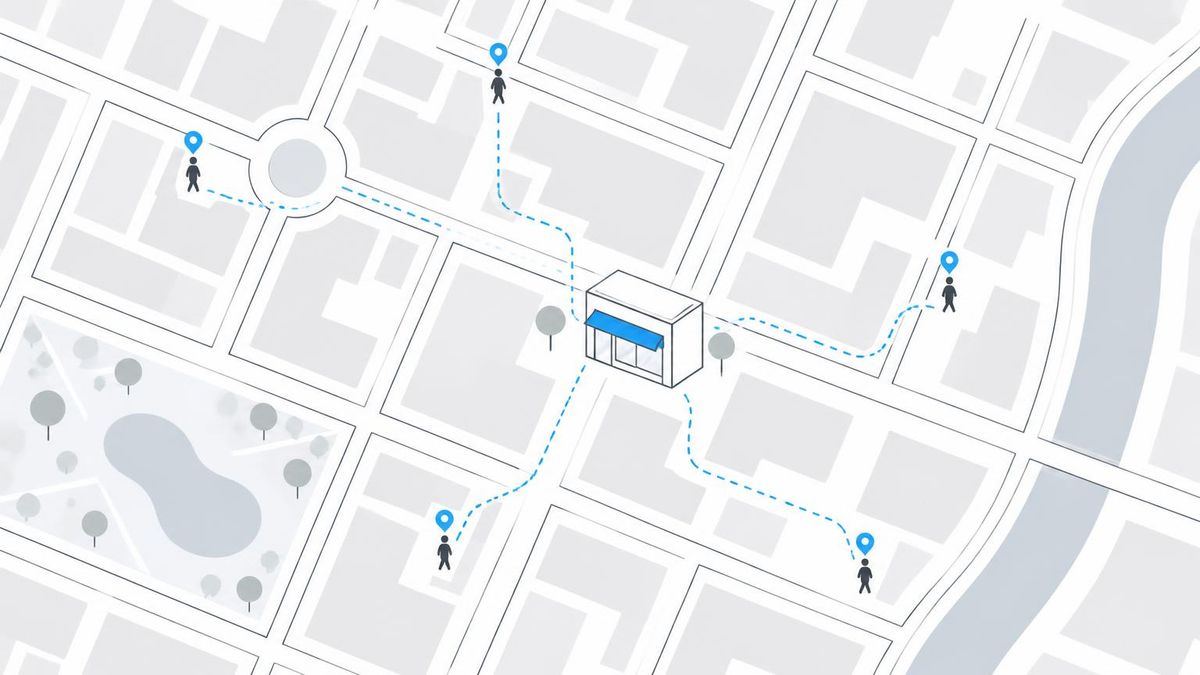
It is the automated purchase of advertising inventory through real-time auctions. Rather than negotiating placements in advance, each impression is evaluated and priced as it becomes available, based on what is known about the audience, the context, and the quality of the supply.
How is it different from traditional media buying?+
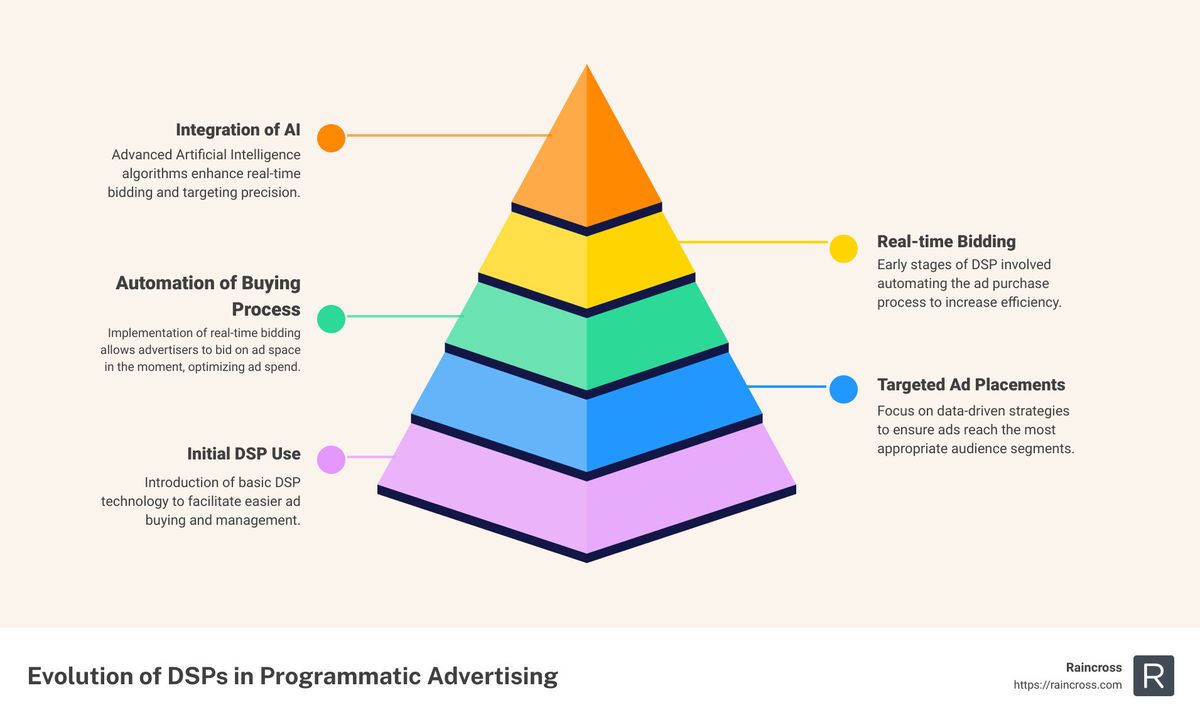
Traditional buying fixes the placement and the rate before the campaign runs. Programmatic decides per impression, which allows audience-led buying and daily change, but it also requires discipline: without curated supply and a real outcome to bid against, automation simply finds cheap inventory faster.
When should we invest in programmatic?+
When intent channels are saturated, when there is first-party data worth activating, or when the program needs incremental demand rather than harvested demand. If paid search is still under-funded against profitable queries, that comes first.
How does it work alongside paid search and paid social?+
Search and social capture and convert existing demand. Programmatic creates demand and keeps a brand present between those moments. We run them under one frequency ceiling and one attribution model so the channels are not credited twice for the same person.
Is geofencing or connected TV separate from programmatic?+
No. Geofencing, connected TV, digital out-of-home, and streaming audio are activation surfaces bought through the same programmatic infrastructure. They share audiences, suppression lists, and measurement rather than running as parallel line items.
Who owns the platform seats and the data?+
You do. Seats, contracts, audiences, and log-level data are held in the client's name, and our fee is stated separately from working media. If the relationship ends, the program keeps running.
How do you prove programmatic worked?+
With a counterfactual. Geo holdouts, matched markets, or control audiences produce a measured difference. Platform-reported view-through conversions are shown, but they are never the number the program is judged on.
Begin a conversation
Send us a programmatic report.
We will read the supply, the frequency, and the attribution, then tell you what the budget is really buying and what we would change first.













 DV360
DV360 StackAdapt
 Amazon DSP
 Yahoo DSP
 GA4
GA4