







Demand created on purpose, measured against revenue

Capability
01 Advertising
Service
Paid Social
Typical engagement
Twelve weeks to first measured read
Measured on
Verified outcomes, not impressions

Search captures the demand that already exists. Paid social creates it. We build audiences from real customer evidence, test creative until the message is proven, and hold the program to acquired customers rather than engagement.

0:1

creative variants tested for every one that scales

0.0×

qualified pipeline per dollar after value-based audiences

0%

lower cost per acquired customer, not per lead

0

week window before budget is scaled

Selected clients

01How it differs

Paid social against paid search.

The two are often compared as budget rivals. They answer different questions, and most programs need both.

  • 01

    Paid social

    Introduces the business to people who were not looking. Demand is created, so the first touch is cheap and the path to revenue is longer and less linear.

    • Demand creation
    • Audience led
    • Creative decides
    • Longer path
  • 02

    Paid search

    Buys the moment of active intent. Immediate and measurable, but capped by how many people are already searching for the category.

    • Demand capture
    • Intent led
    • Auction priced
    • Volume capped
  • 03

    Run together

    Social raises the volume of branded and category search that paid search then captures. Measured separately, both are undervalued.

    • Lifts search volume
    • Shared audiences
    • One revenue read
    • Holdout tested
  • 04

    Where each one fails

    Social fails without creative volume and a reason to care. Search fails when nobody is searching yet. Neither survives a landing page that does not keep the promise.

    • Creative fatigue
    • Thin demand
    • Weak offer
    • Broken measurement
02The experts behind the work

Meet some of the Raincross experts behind Paid Social.

A selection of the specialists who lead and shape this work, supported by a broader multidisciplinary team.

03Overview

Paid social is demand creation, not social media management.

Nobody opens an app looking for your product. Paid social has to earn the moment: the right audience, a message that means something to them, and an offer worth interrupting a feed for. That is a research and creative problem long before it is a media buying problem.

Most programs stall because the audience is guessed and the creative is an afterthought. Two ad sets, one video cut from a brand film, and a platform left to optimize toward whatever event was easiest to tag.

We build audiences from first-party evidence, brief creative against what each segment actually needs to hear, and score conversions by quality so the platform learns to find buyers. Followers, likes, and reach are diagnostics. Acquired customers are the result.

Ad accounts, pixels, conversion APIs, audience lists, and creative files stay in the client's name. We operate them, you own them.

Fig. 01Audience discovery
Research becomes segmentation, segmentation earns the creative brief, and what the landing page learns returns to the audience it came from.
0:1
creative variants tested for every one that scales
0
revenue definition every platform is measured against
04Platforms and technology

The stack behind the work.

We are platform-independent. Tooling is chosen per engagement, and every account is client-owned.

Social platforms
  • Meta logoMeta (Facebook and Instagram)
  • LinkedIn logoLinkedIn
  • TikTok logoTikTok
  • Pinterest logoPinterest
  • Reddit logoReddit
  • X logoX
  • and more...
Creative and production
  • Native video editing
  • Dynamic creative testing
  • Catalog and feed creative
  • UGC and creator sourcing
  • Motion and static variants
  • and more...
Data and measurement
  • Conversions API
  • Server-side tagging
  • GA4 logoGA4
  • CRM value feedback
  • Geo holdout testing
  • Looker Studio reporting
  • and more...
05Problems solved

What this work is usually brought in to fix.

Six failure patterns we see repeatedly, and what we change about each.

Boosted posts standing in for a program
Organic content promoted at the audience the platform picks. We plan against segments, funnel stage, and a defined conversion event.
Creative treated as decoration
Creative is the largest performance variable on social. We brief, produce, and retire it on a schedule rather than when it visibly fatigues.
Audiences built on assumptions
Interest targeting selected from a dropdown. We start from customer data, sales conversations, and the segments that already convert.
Optimized to engagement events
Cheap clicks and video views train the algorithm toward browsers. We feed qualified conversions back through the conversions API.
Platform reporting taken at face value
Every platform claims the same sale. We reconcile against modeled contribution, holdouts, and what the business actually booked.
Prospecting funded by remarketing results
Retargeting harvests demand other work created. We separate the two budgets so growth is not mistaken for efficiency.
06Who it's for

Where this service earns its place.

If none of these describe the situation, we will say so before a proposal is written.

  • 01

    Categories with low search volume

    Products people would buy but are not yet searching for. Demand has to be created before search can harvest it.

  • 02

    Considered purchases with long cycles

    Programs where the first touch is months from revenue and audience quality matters more than lead volume.

  • 03

    Businesses with usable first-party data

    Customer lists, CRM stages, and purchase history that can build lookalikes and value-based audiences worth bidding differently for.

  • 04

    Retail and ecommerce with catalog depth

    Feed-driven programs where creative volume and product segmentation decide contribution margin.

  • 05

    B2B and professional services

    Buying committees reachable by role, seniority, and firmographics on LinkedIn, where cost per lead is high and lead quality decides everything.

  • 06

    Search programs that have hit their ceiling

    Accounts capturing nearly all profitable query intent. Further growth requires new demand, not another bid adjustment.

07Our approach

Audiences and creative are one decision, not two

A precise audience shown the wrong message performs like a bad audience. The work is deciding who is worth reaching, what would genuinely move them, and proving both in market rather than in a deck.

In practice: segments built from customer evidence, a creative brief written per segment, structured testing that isolates one variable at a time, landing experience treated as part of the buy, and scale released only against a measured efficiency floor.

Fig. 02

How creative earns its budget.

Creative is the variable with the widest performance range on social, so it is tested like one. Concepts enter the loop, evidence decides what survives, and scale is the last step rather than the reflex.

One variable per test. A new hook and a new offer in the same ad teaches nothing.

Fig. 02Concept, launch, measure, learn, iterate, scale
08Process

How the work runs.

Eight stages, run in order. Measurement design is agreed before any budget is committed.

09Capabilities

What is included.

Scoped per engagement. Most programs use four or five of the capabilities below.

  • 01

    Audience strategy and segmentation

    First-party lists, lookalikes, value-based audiences, and exclusion logic built from customer evidence rather than interest menus.

  • 02

    Creative strategy and testing

    Concept development, native production, structured test matrices, and a retirement schedule that keeps fatigue ahead of performance drops.

  • 03

    Full-funnel campaign management

    Prospecting, consideration, conversion, and retention planned and budgeted as one program with separate reads.

  • 04

    Catalog and feed advertising

    Product feeds, dynamic creative, and catalog segmentation built for margin rather than blanket coverage.

  • 05

    B2B social on LinkedIn

    Role and firmographic targeting, matched audiences, and lead quality scored against pipeline instead of form fills.

  • 06

    Conversions API and event quality

    Server-side event delivery, deduplication, match quality, and value passing so bidding has something true to learn from.

  • 07

    Landing pages and conversion work

    Pages built and tested against the promise the ad made, in step with our Conversion Optimization practice.

  • 08

    Measurement and incrementality

    Holdout tests, geo experiments, and modeled contribution that separate what social added from what it took credit for.

Fig. 03

How the funnel is read.

Each stage has a job and a number attached to it. Judging awareness on cost per acquisition, or retention on reach, is how good programs get cut early.

Retention is where paid social stops being a cost and starts funding the next round of prospecting.

Fig. 03Awareness, consideration, conversion, retention

Talk it through

Ask us what your social spend is actually acquiring

Send a recent account export and a customer list. We will tell you which audiences produced customers, which produced engagement, and what the creative is costing you.

10Capability

01

Advertising

Media planned and bought against the buying journey rather than the platform, with direct channels like email activated in the same plan. The focus is measurable performance, not simply placement, so every dollar reads cleanly against revenue.

Groundwater monitoring wellheads and injection lines at a remediation site

Regenesis

Regenesis had genuine technical authority in bioremediation, but that authority was hard to find. Search visibility trailed the company's standing in the industry, and the traffic that did arrive rarely turned into a request, a download, or a conversation.

01 Industry

Environmental. Visibility.

02 What we did

Regenesis had genuine technical authority in bioremediation, but that authority was hard to find. Search visibility trailed the company's standing in the industry, and the traffic that did arrive rarely turned into a request, a download, or a conversation.

0%

Increase in website goal completions

Read the full case study
13Selected engagements

Proof, with the holdout shown.

View all case studies
TeeBoxx logo

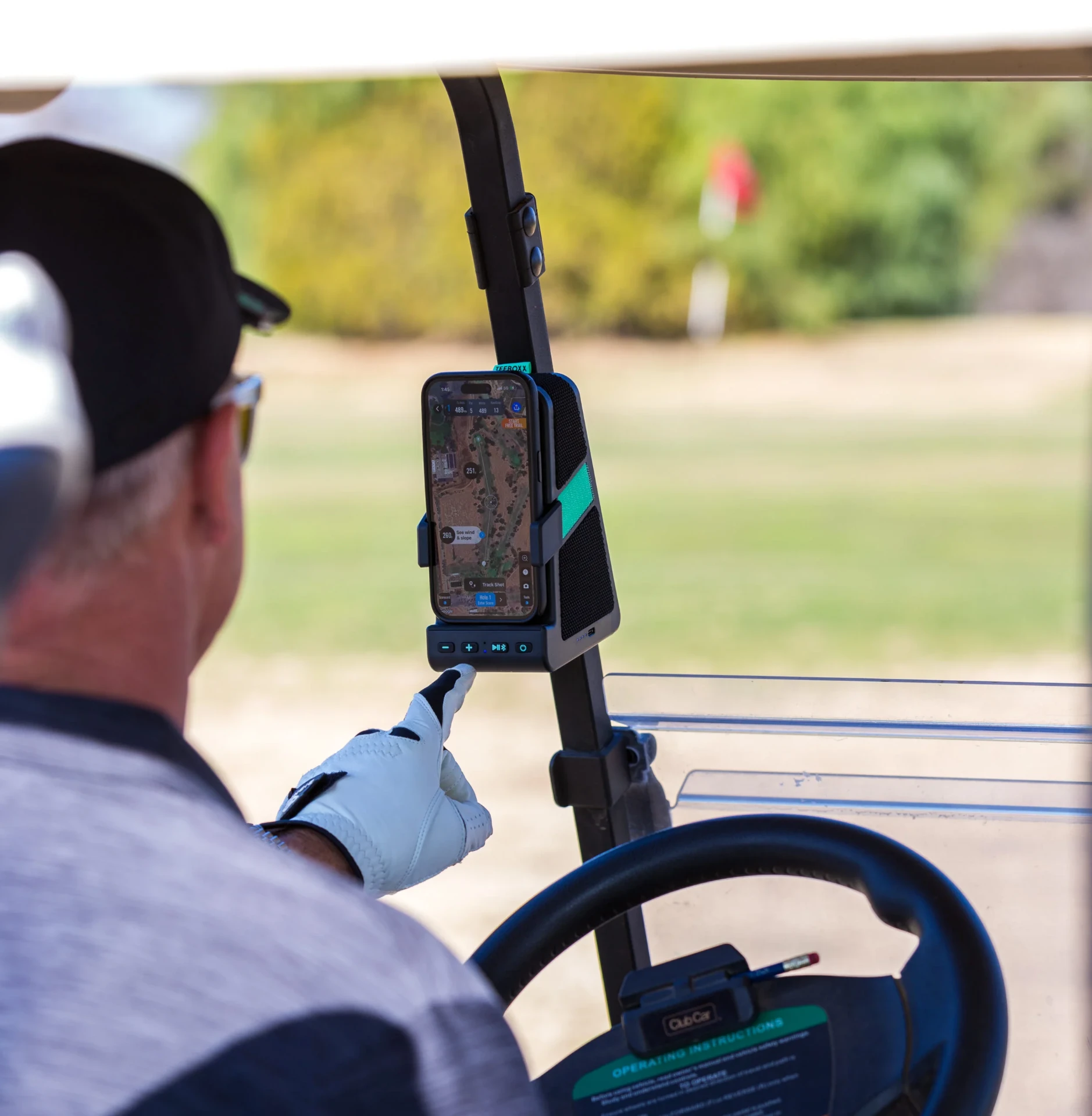
TeeBoxx was introducing a new product into a competitive golf-accessories market alongside established brands such as Bushnell, Blue Tees, and Precision Pro. The challenge extended beyond generating awareness. TeeBoxx needed to clearly communicate a multifunctional product, build credibility with golfers, create the assets required for launch, and establish a scalable customer-acquisition strategy across paid search, social media, and e-commerce channels.

Retail and e-commerce | Advertising

Launch to growth

Engaged from product launch strategy through active e-commerce acquisition

Retail and e-commerce

Advertising
Read full story
Golfer in a cart reaching for the TeeBoxx mounted on the cart frame with a course app on screen

TeeBoxx

01 / 02

15Questions

Common questions.

  • What is paid social advertising?

    Paid social places your business in front of a defined audience inside social platforms, chosen by demographics, interests, behaviours, life events, and your own customer data. Unlike search, the person was not looking for you, so the audience and the creative carry the work that a query would otherwise do.

  • How is paid social different from paid search?

    Paid search captures demand that already exists and is capped by how many people are searching. Paid social creates demand by introducing the business to people who fit the profile of a customer. Search usually shows a faster measured return; social usually raises the volume of demand search can capture. Run together and measured against one revenue definition, each one makes the other cheaper.

  • When should we invest in paid social?

    When the category has thin search volume, when your search program is already capturing most profitable intent, when you have first-party data worth building audiences from, or when the product needs explaining before anyone would think to search for it. If none of those are true and search demand is still unclaimed, search comes first.

  • Which platforms do you manage?

    Meta, LinkedIn, TikTok, Pinterest, Reddit, and X. Platform choice follows the audience and the objective rather than a standard package. B2B programs usually start on LinkedIn and Meta, consumer programs on Meta and TikTok, and visual retail on Meta and Pinterest. We would rather run two platforms properly than six thinly.

  • How important is creative?

    It is the largest controllable variable in the account. Two ad sets with the same audience and budget can differ several times over on cost per acquisition purely on creative. That is why creative is briefed per segment, produced in volume, tested one variable at a time, and retired on schedule rather than when performance has already fallen.

  • How do you measure success?

    Acquired customers, qualified pipeline, cost per acquisition, and contribution to revenue. Reach, engagement, and follower growth are diagnostics we watch internally. Where spend justifies it, we run geo holdouts so the reported effect is a measured difference rather than a platform claim.

  • Do you also manage our organic social channels?

    Organic content and community management are a different discipline, and we will say so rather than quietly bundle it. We work alongside whoever owns organic, since creative that performs in paid usually tells the organic team something useful, and the reverse is true just as often.

  • Who owns the accounts and creative?

    You do. Ad accounts, pixels, conversions API integrations, audience lists, and every creative file are created in the client's name. If the relationship ends, the program continues without us.

Next step

Let's find the audience worth creating demand in

Share a customer list and a revenue definition. We will come back with the segments worth funding, the creative the program is missing, and what has to change on the page first.

Paid social engagements begin with audience research and measurement design, agreed before budget is committed.