Location data is only useful if it survives scrutiny. We build geofenced audiences from observed real-world behavior, activate them across display, video, and streaming, and measure the result as walk-ins and revenue rather than impressions inside a polygon.
Geofencing is widely sold and rarely done well. Most programs draw a shape on a map, buy cheap inventory inside it, and report impressions as though proximity were intent. The audience is noisy, the frequency is uncontrolled, and the measurement is a screenshot.
We treat location as one input into an audience model. Who was there, how long they stayed, how often they return, what they did afterward, and whether any of that correlates with becoming a customer. Only the segments that clear that test get budget.
The activation then runs through the same infrastructure as the rest of the media program, so a geofenced audience can be suppressed against existing customers, sequenced with connected TV, and measured in the same attribution model as paid search.
Every polygon is documented with its rationale, dwell threshold, and lookback window.
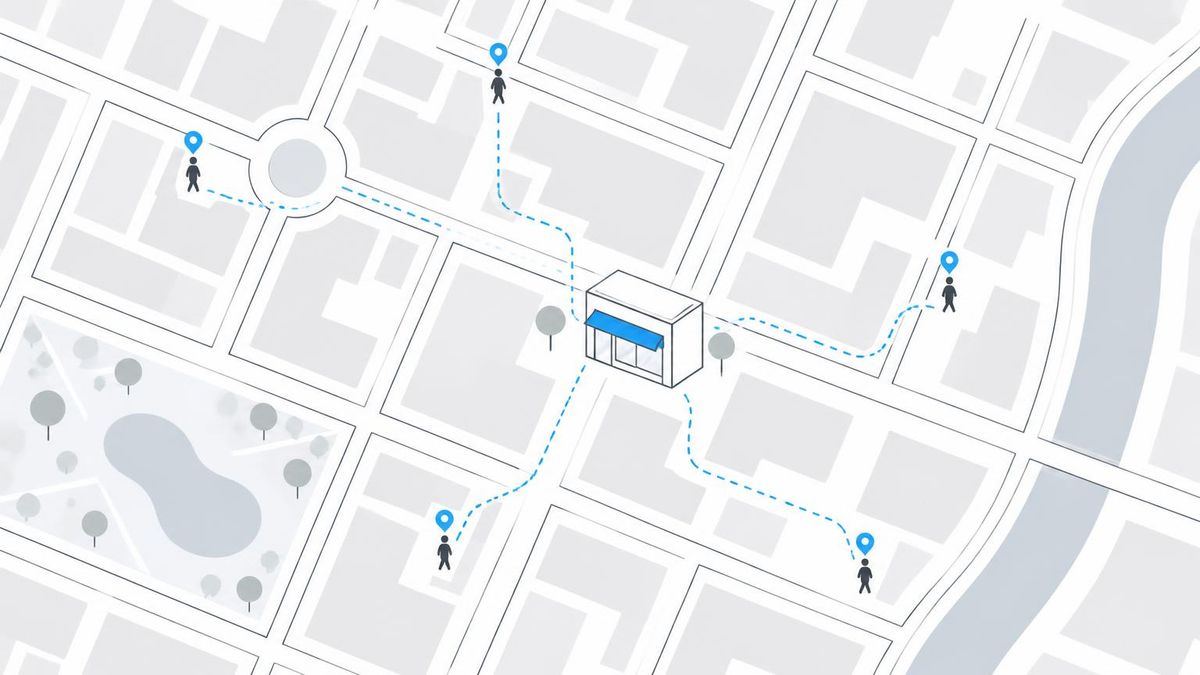
Fig. 01Audience construction
A location audience is defined by dwell threshold and lookback window, then resolved to households before activation.
0%
median match rate on device-to-household resolution
0
week standard measurement window for walk-in lift
04Platforms and technology
The stack behind the work.
We are platform-independent. Tooling is chosen per engagement, and every account is client-owned.
Demand-side and activation
Basis
The Trade Desk
DV360
StackAdapt
Amazon DSP
and more...
Location and measurement
Foursquare / Placer
Kochava
Adelphic
Geo holdout testing
Matched-market design
and more...
Verification and analytics
IAS and DoubleVerify
GA4
Call tracking
CRM revenue matching
Looker Studio reporting
and more...
05Problems solved
What this work is usually brought in to fix.
Six failure patterns we see repeatedly, and what we change about each.
Proximity mistaken for intent
A drawn shape captures everyone who passes through it. We apply dwell time, visit frequency, and time-of-day filters so the audience reflects behavior rather than traffic.
Unverifiable location data
Much of the supply is modeled, not observed. We buy from providers who disclose their methodology and we test match quality before scaling spend.
Wasted frequency
Uncapped programmatic delivery burns budget on a small pool of devices. We cap by household and suppress converted audiences continuously.
Attribution that stops at the click
The point of location media is the offline outcome. We instrument walk-in lift, call tracking, and CRM matching so the store visit is the reported number.
Competitor conquesting with no follow-through
Reaching a competitor's customer is easy. Giving them a reason to switch requires a creative and offer strategy, which we build alongside the targeting.
Privacy and compliance exposure
Healthcare, legal, and public sector clients cannot target sensitive locations. We maintain exclusion policies and review every fence against them.
06Who it's for
Where this service earns its place.
If none of these describe the situation, we will say so before a proposal is written.
01
Multi-location businesses
Healthcare systems, retail groups, restaurants, and service brands where the outcome is a visit to a specific address.
02
Event and destination marketers
Tourism boards, venues, and conference organizers who need to reach an audience concentrated in time and place.
03
Considered-purchase brands
Auto, home services, and financial categories where a competitor visit is the strongest available intent signal.
04
Public sector and civic programs
Agencies running awareness or behavior-change campaigns bounded by district, service area, or jurisdiction.
05
B2B with physical concentration
Manufacturers and industrial suppliers targeting trade shows, industrial parks, and named accounts by building.
06
Teams that already tried geofencing
Programs that delivered impressions and no evidence, and now need the measurement rebuilt before the budget is renewed.
07Our approach
We do not buy a radius. We buy a behavior
A geofence is a hypothesis about who a place attracts and why that matters commercially. We write the hypothesis down, build the audience to test it, and hold the campaign to a walk-in or revenue outcome. Fences that do not clear the bar are retired rather than defended.
Practically, that means fewer, tighter polygons; documented dwell and lookback rules; household-level frequency control; and a measurement design agreed with the client before the first impression is served.
Fig. 02
How data moves through the program.
Signal is collected, identity is resolved, the model assigns credit, and the next allocation follows from it. The loop feeds itself.
The model is the part we own. Everything else is plumbing.
Fig. 02Collect, resolve, model, decide
08Process
How the work runs.
Eight stages, run in order. Measurement design is agreed before any budget is committed.
09Capabilities
What is included.
Scoped per engagement. Most programs use four or five of the capabilities below.
01
Competitor conquesting
Audiences built from verified visits to named competitor locations, with switching creative and offer strategy.
02
Event and venue targeting
Time-bounded fences around conferences, stadiums, and festivals, including retargeting windows after the event.
03
Addressable geofencing
Household-level targeting from address lists, useful for named-account and service-area programs.
04
Historical and retroactive fencing
Audiences rebuilt from past date ranges, for annual events and seasonal demand.
05
Walk-in attribution
Verified visit measurement with holdout groups, reported as lift rather than raw visits.
06
CRM and offline matching
Exposed audiences matched back to closed revenue in the client's CRM where data sharing permits.
07
Cross-channel sequencing
Geofenced audiences extended into connected TV, streaming audio, and paid social for coordinated frequency.
08
Privacy governance
Sensitive-location exclusion policies, consent handling, and documentation for regulated categories.
Fig. 03
What reporting looks like.
One index for the program, three standing indicators beneath it. No vanity metrics, no screenshots of a platform dashboard.
Fig. 03Program index and standing indicators
Talk it through
Let's discuss your unique advertising needs.
Send us the map, the list, or the event. We will tell you whether location media is the right instrument before anyone writes a proposal.
Media planned and bought against the buying journey rather than the platform, with direct channels like email activated in the same plan. The focus is measurable performance, not simply placement, so every dollar reads cleanly against revenue.
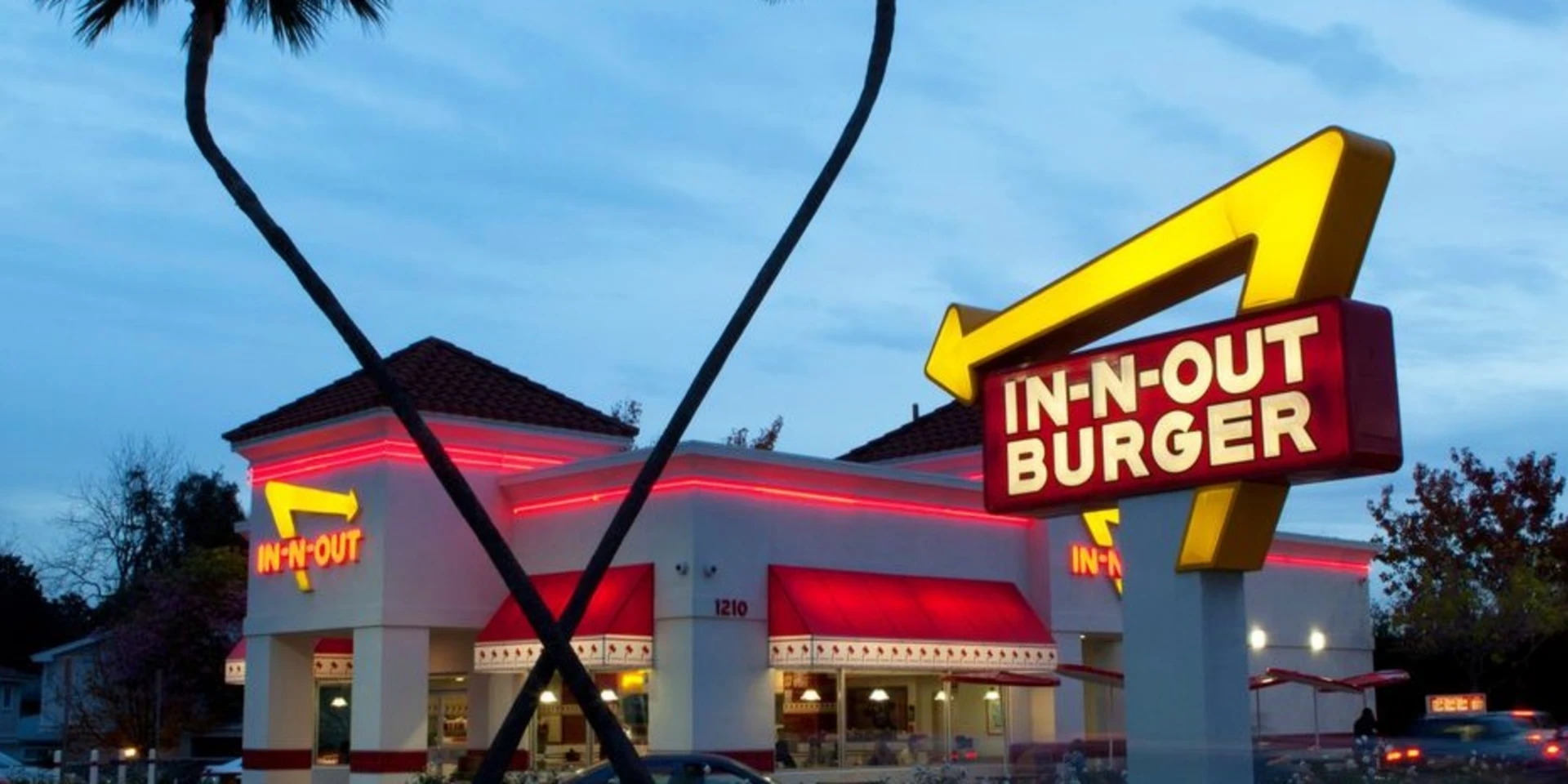
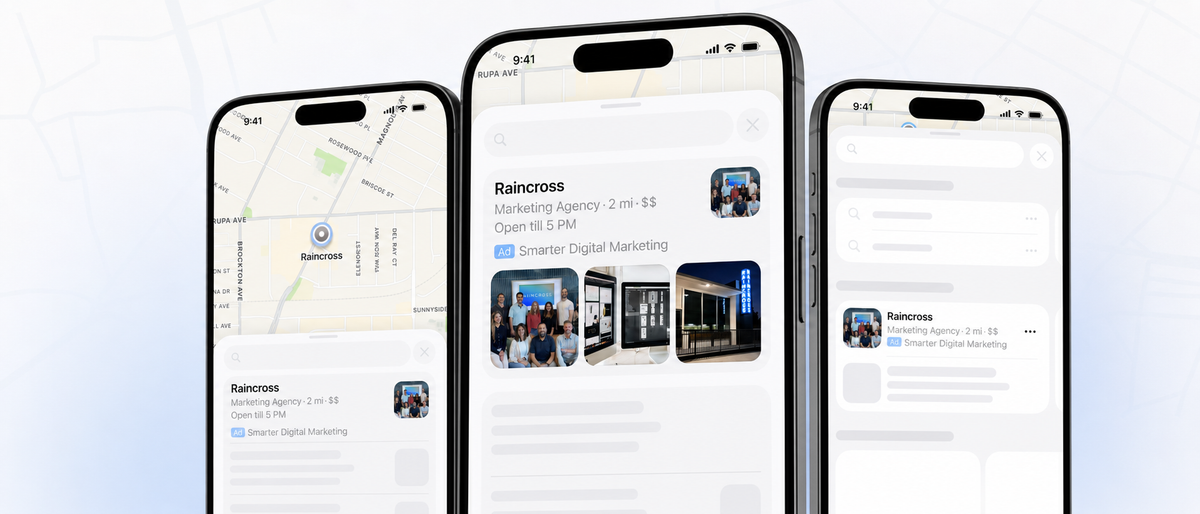
Awareness was never the problem. The opportunity was proximity: making it effortless to find a nearby location at the exact moment of the decision. Most of those searches happened on a phone with immediate intent, someone wanting hours, directions, or the closest restaurant, not information about the brand.
01 Industry
Franchises. Advertising.
02 What we did
Awareness was never the problem. The opportunity was proximity: making it effortless to find a nearby location at the exact moment of the decision. Most of those searches happened on a phone with immediate intent, someone wanting hours, directions, or the closest restaurant, not information about the brand.
A new restaurant location has no habit built around it. The people most likely to walk in live, work, and shop within a few miles, but they will not find a new opening on their own. Slater's 50/50 needed local awareness fast, and it needed proof that the awareness turned into visits rather than a number on a media report.
Accuracy depends entirely on the data source and the fence design. Observed GPS data with a dwell threshold is reliable within roughly ten to twenty meters. Modeled or IP-derived location is not, and we do not use it for conquesting.
Can you target a competitor's location?+
Yes, in most categories. Competitor conquesting is one of the strongest applications of location media. Regulated categories such as healthcare carry restrictions, and we maintain an exclusion policy for sensitive locations.
How far back can you build an audience?+
Historical fencing typically reaches back six to twelve months depending on the provider, which makes annual events and seasonal demand addressable outside their window.
How do you prove a store visit came from the advertising?+
With a holdout. We withhold delivery in matched geographies or audience segments and report the difference in verified visits, rather than crediting every visit that follows an impression.
What budget does a geofencing program require?+
Enough to reach a defined audience at controlled frequency for a full measurement window. In practice that usually means a twelve-week commitment rather than a monthly test, because a shorter run cannot produce a trustworthy lift read.
Does geofencing still work with privacy changes and signal loss?+
It does, with a narrower and better-documented dataset than five years ago. Consent-based observed location remains available, and household-level addressable targeting has largely replaced the looser device graphs that privacy changes retired.
Can geofencing run alongside our existing media?+
Yes, and it should. Location audiences are most effective when suppressed against existing customers and sequenced with connected TV, paid social, and search rather than run as a standalone line item.
Begin a conversation
Tell us which locations matter.
Send the addresses, the competitors, or the events. We will come back with a view on whether location media is the right instrument, and how we would prove it worked.













 DV360
DV360 StackAdapt
 Amazon DSP
 GA4
GA4 Call tracking