Display inventory bought on audience, not impressions.
Capability
01 Advertising
Service
Programmatic Display
Typical engagement
Twelve weeks to first measured read
Measured on
Verified outcomes, not impressions
Programmatic display is the discipline of buying visual ad inventory one impression at a time. The value is not in the format. It is in the decision: which person, which context, which supply path, and what that impression is worth against a real outcome.
Most display advertising fails because the buyer optimized for the wrong thing: lowest CPM, broadest reach, or a report full of impressions that never translated into action. We treat display as a targeting and sequencing discipline first, and a creative format second.
The auction gives us the ability to evaluate every impression. That ability only matters if we know what we are looking for. We define audiences from first-party data, modeled lookalikes, and contextual signals, then score supply quality so the budget reaches real publishers through the shortest path.
Creative is sequenced to the relationship: prospecting introduces the brand, retargeting answers the objection, and suppression protects existing customers from being sold to twice. Each stage is measured against the same outcome, so the channel earns its budget rather than inheriting it.
Every placement is post-bid verified for viewability, brand safety, and domain quality before the next dollar is released.
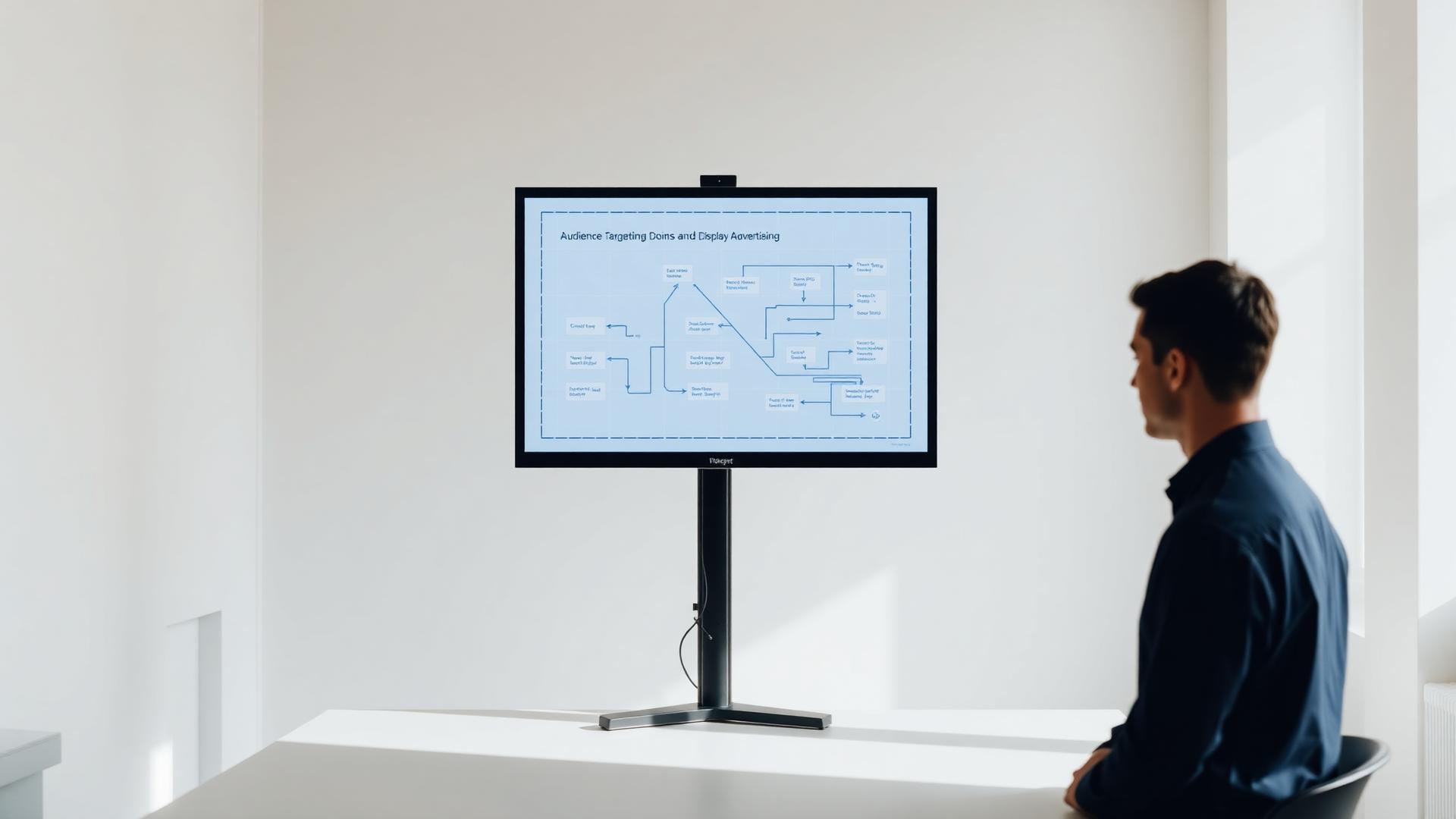
Fig. 01Auction path
A display impression is evaluated in milliseconds. The winning bid is the one that best combines audience fit, page context, and supply quality, not simply the highest CPM.
0%
median share of spend recovered from made-for-advertising inventory
0
frequency ceiling across prospecting and retargeting lines
04Platforms and technology
The stack behind the work.
We are platform-independent. Tooling is chosen per engagement, and every account is client-owned.
Demand-side platforms
Basis
The Trade Desk
DV360
StackAdapt
Yahoo DSP
Amazon DSP
and more...
Data and identity
LiveRamp
First-party CRM onboarding
UID2
Contextual providers
Clean room matching
and more...
Verification and measurement
IAS and DoubleVerify
Peer39
Moat
Geo holdout testing
Looker Studio reporting
and more...
05Problems solved
What this work is usually brought in to fix.
Six failure patterns we see repeatedly, and what we change about each.
Reach mistaken for awareness
A high impression count means little if the audience never notices or remembers. We optimize toward attention and downstream action, not exposure volume.
Retargeting that chases instead of persuades
Following every visitor with the same creative trains people to ignore the brand. We sequence messages by stage and cap frequency at the household.
Creative built for a homepage, not a stage
One size fits all creative underperforms at every stage. We build formats and messages for prospecting, consideration, and retention separately.
Viewability treated as a vanity metric
A viewable impression is a minimum, not a victory. We pair viewability with attention signals and downstream outcomes to judge quality.
Supply paths that hide resellers
Budget often passes through multiple intermediaries before reaching a publisher. We use supply path optimization and direct deals to shorten the route.
Attribution that credits everything
Last-click and view-through numbers overstate display's role. We hold out audiences or geographies so the reported lift is a measured difference.
06Who it's for
Where this service earns its place.
If none of these describe the situation, we will say so before a proposal is written.
01
Brands scaling beyond search and social
Teams that need incremental demand and cannot rely on intent channels alone.
02
Considered-purchase categories
Long sales cycles where staying present between queries matters as much as capturing them.
03
Multi-location advertisers
Programs that need national creative frameworks with local audience and geography controls.
04
Teams with first-party data
CRM, subscription, or transaction data that can be activated as segments and lookalike seeds.
05
Advertisers leaving bundled vendors
Organizations moving from opaque managed services to client-owned seats and transparent fees.
06
Categories with compliance needs
Healthcare, finance, and public sector programs that require documented exclusions and verified placements.
07Our approach
We buy the person and the moment, not the placement
A display impression is worth something different to every brand and almost nothing by default. The work is deciding which impressions are worth paying for, sequencing the creative to the relationship, and proving the result with a holdout rather than a dashboard.
In practice: audience quality first, supply quality second, creative sequenced by stage, and a weekly review that removes inventory rather than averaging it out.
Fig. 02
Placement buying and audience buying, step for step.
Traditional display buys a list of websites and waits for a report. Programmatic display buys a person in a moment, then changes the buy while the campaign is still running. The difference is not the format. It is where the decision is made and how often it can be revised.
Every impression is scored on audience fit, page context, and supply path before a bid is placed.
Behavioral, contextual, and geographic signals are combined rather than chosen between.
First-party segments and modeled third-party audiences carry different bid ceilings.
Fig. 02Traditional against programmatic
08Process
How the work runs.
Eight stages, run in order. Measurement design is agreed before any budget is committed.
09Capabilities
What is included.
Scoped per engagement. Most programs use four or five of the capabilities below.
01
Audience modeling
First-party data, contextual signals, and modeled lookalikes combined into segments with a stated hypothesis and refresh schedule.
02
Curated supply and PMPs
Private marketplaces, direct deals, and inclusion lists assembled per program and reviewed monthly.
03
Supply path optimization
Log-level analysis of resellers and hops so budget reaches publishers by the shortest route.
04
Creative sequencing
Prospecting, retargeting, and loyalty creative built as separate messages rather than one ad resized everywhere.
05
Dynamic creative optimization
Message and offer variation by audience, geography, and stage, tested continuously rather than annually.
06
Brand safety and verification
Pre-bid controls plus post-bid verification, with category exclusions documented for regulated clients.
07
Cross-channel frequency management
Household frequency caps across display, video, and audio so the same person is not over-sold.
08
Incrementality testing
Geo holdouts, matched markets, and PSA control cells that produce a defensible lift number.
Fig. 03
What a display report looks like.
Three standing indicators sit beneath the outcome: verified viewability, supply quality, and cost per measured result. No platform screenshots.
The outcome is read against a holdout, not a platform attribution model.
Quality metrics are leading; efficiency metrics follow from them.
Fig. 03Outcome, quality, efficiency
Talk it through
Ask us what your display budget is actually reaching.
Send a recent display report. We will tell you what share reached real publishers, what share was viewable, and what it would take to prove the rest worked.
Media planned and bought against the buying journey rather than the platform, with direct channels like email activated in the same plan. The focus is measurable performance, not simply placement, so every dollar reads cleanly against revenue.
The mechanics stay the same. The audience definition, the inventory policy, and the outcome being measured do not.
01
Healthcare
Service line demand built from contextual and geographic signals rather than sensitive behavioral data, with documented exclusions and placement-level verification. Measured to appointment requests, not impressions.
02
Manufacturing
Small, high-value buying committees reached through firmographic and account-based segments across trade and technical publications. Measured to qualified inquiries and pipeline, with long consideration cycles held in view.
03
Tourism
Origin-market audiences and seasonal windows, with creative sequenced from inspiration to booking. Geographic and weather-triggered delivery, measured to booking value rather than sessions.
04
Retail and e-commerce
First-party purchase data activated as prospecting seeds and suppression lists, with dynamic creative carrying category and offer variation. Measured to incremental revenue against a matched-market holdout.
05
Environmental
Policy makers, commercial buyers, and residents each reached with a different message on the same infrastructure. Contextual placement against sustainability and civic coverage, measured to consultation and program enrollment.
06
Home services
Tight service-area geography, household frequency caps, and seasonal demand curves. Display creates the demand that search later captures, and the two are read together rather than credited separately.
07
Higher education
Prospective students, parents, and adult learners treated as distinct audiences with distinct proof points, sequenced across the inquiry, application, and deposit windows in the enrollment calendar.
City of Corona Police Department
Police recruitment competes with every other employer for the same small pool of people who are willing and eligible to serve. Job boards reach candidates who are already looking. The department needed to reach the ones who were not, hold their attention long enough to consider the badge, and do it inside a two-month window with open positions waiting to be filled.
01 Industry
Government & Public Sector. Advertising.
02 What we did
Police recruitment competes with every other employer for the same small pool of people who are willing and eligible to serve. Job boards reach candidates who are already looking. The department needed to reach the ones who were not, hold their attention long enough to consider the badge, and do it inside a two-month window with open positions waiting to be filled.
A new restaurant location has no habit built around it. The people most likely to walk in live, work, and shop within a few miles, but they will not find a new opening on their own. Slater's 50/50 needed local awareness fast, and it needed proof that the awareness turned into visits rather than a number on a media report.
It is the automated buying of visual ad inventory through real-time auctions. Each impression is evaluated and priced based on the audience, the context of the page, and the quality of the supply path, then delivered in milliseconds.
How is programmatic display different from traditional display buying?+
Traditional buying negotiates fixed placements with specific publishers in advance. Programmatic evaluates every impression individually, which allows audience-led buying and daily optimization, but it also requires discipline around supply quality and measurement.
Is programmatic display only for retargeting?+
No. Retargeting is one stage. We also use programmatic display for prospecting new audiences, sequencing messages through the buying journey, and suppressing existing customers from acquisition campaigns.
How do you avoid low-quality or made-for-advertising inventory?+
We start with inclusion lists, private marketplaces, and direct publisher deals. Open exchange is used as a residual only. New domains are reviewed weekly, and post-bid verification catches anything that slips through.
How do you prove programmatic display drove results?+
With a counterfactual. Geo holdouts, matched markets, or control audiences produce a measured difference. Platform-reported view-through conversions are shown, but they are never the number the program is judged on.
Who owns the platform seats and the data?+
You do. Seats, contracts, audiences, and log-level data are held in the client's name, and our fee is stated separately from working media. If the relationship ends, the program keeps running.
What creative formats work best?+
The best format is the one matched to the stage of the relationship. Prospecting needs attention and clarity. Retargeting needs to answer the objection. Suppression needs to stop selling to people who already bought. We build separate creative for each stage.
Begin a conversation
Send us a display report.
We will read the audience, the supply, and the attribution, then tell you what the budget is really buying and what we would change first.













 DV360
DV360 StackAdapt
 Yahoo DSP
 Amazon DSP