








Television with the accountability of digital

Capability
01 Advertising
Service
Connected TV
Typical engagement
Twelve weeks to first measured read
Measured on
Verified outcomes, not impressions

Streaming moved television onto addressable infrastructure. The storytelling did not change. What changed is that the household can be chosen, the view can be tied to the visit that followed, and the spend can be defended.

0%

video completion floor on inventory we will buy

0.0

household frequency cap across a typical flight

0%

branded search lift in exposed markets against holdout

0

made-for-advertising apps in the allow list

Selected clients

01How audiences are chosen

Four ways a household is selected.

Every CTV audience we build starts from evidence the client already owns, then extends outward only as far as the measurement can follow.

  • 01

    First-party and CRM matching

    Customer lists, lapsed accounts, and CRM stages matched to households, with current customers suppressed unless retention is the objective.

    • Customer lists
    • Lapsed buyers
    • CRM stages
    • Suppression
  • 02

    Geographic and footprint

    Service areas, trade zones, campus catchments, and postal-level coverage for organizations whose market has an edge on a map.

    • Service areas
    • DMA and postal
    • Trade zones
    • Radius
  • 03

    Behavioural and in-market

    Purchase behaviour, category research, and in-market signals for households showing the pattern that precedes a decision.

    • Purchase data
    • In-market
    • Category interest
    • Life events
  • 04

    Modeled and lookalike

    Expansion from the segments already converting, sized against the measurement rather than the available inventory.

    • Lookalikes
    • Value modeled
    • Retargeting
    • Sequential
02The experts behind the work

Meet some of the Raincross experts behind Connected TV.

A selection of the specialists who lead and shape this work, supported by a broader multidisciplinary team.

03Overview

Connected TV is addressable brand advertising, not a commercial slot.

Connected TV is video delivered to an internet-connected television through a streaming service or device. It looks like television because it is television: full screen, sound on, in the living room, usually unskippable. It behaves like digital because the impression carries an address.

That address is the whole argument. A broadcast buy reaches a daypart and a demographic estimate. A CTV buy reaches specific households, chosen from first-party lists, purchase behaviour, location history, or the segments already converting elsewhere in the program.

Most CTV disappoints because it is bought as a reach line item and reported as impressions. We plan it as an upper-funnel driver inside the wider media program, then hold it to site visits, branded search lift, and revenue rather than completion rate.

Inventory, audience segments, and measurement setup are documented in the client's name. Nothing about the program depends on us to keep running.

Fig. 01Connected TV ecosystem
Audience defines the platform mix, the platform mix defines the inventory, and everything below the buy exists to prove what the view was worth.
0%
video completion floor on premium inventory we will buy
0
revenue definition CTV is reconciled against
04Networks and publishers

Where the impressions actually run.

Representative inventory we buy against on connected TV. Networks and apps are selected per audience, then held to allow lists rather than open exchange defaults.

Streaming services

  • Hulu logoHulu
  • Disney+ logoDisney+
  • Peacock logoPeacock
  • Paramount+ logoParamount+
  • Max logoMax
  • Netflix logoNetflix
  • Amazon Prime Video logoAmazon Prime Video
  • Tubi logoTubi
  • Pluto TV logoPluto TV
  • Crackle logoCrackle
  • and more...

Device platforms

  • Roku logoRoku
  • Samsung TV Plus logoSamsung TV Plus
  • Vizio logoVizio
  • LG Channels logoLG Channels
  • YouTube TV logoYouTube TV
  • Sling TV logoSling TV
  • Fubo logoFubo
  • Philo logoPhilo
  • DIRECTV logoDIRECTV
  • and more...

Network programming

  • ESPN logoESPN
  • AMC logoAMC
  • Food Network logoFood Network
  • CNBC logoCNBC
  • USA Network logoUSA Network
  • E! logoE!
  • HGTV logoHGTV
  • Discovery logoDiscovery
  • TNT logoTNT
  • Bravo logoBravo
  • National Geographic logoNational Geographic
  • The Weather Channel logoThe Weather Channel
  • and more...
05Platforms and technology

The stack behind the work.

We are platform-independent. Tooling is chosen per engagement, and every account is client-owned.

Streaming and inventory
  • Hulu logoHulu
  • Disney+ logoDisney+
  • Peacock logoPeacock
  • Paramount+ logoParamount+
  • Roku logoRoku
  • Amazon Prime Video logoAmazon Prime Video
  • YouTube TV logoYouTube TV
  • Samsung TV Plus logoSamsung TV Plus
  • Pluto TV logoPluto TV
  • and more...
Buying and delivery
  • Programmatic guaranteed
  • Private marketplace deals
  • Publisher direct
  • Household frequency control
  • Inventory allow lists
  • and more...
Data and measurement
  • Device graph stitching
  • GA4 logoGA4
  • Server-side tagging
  • Branded search baselines
  • Geo holdout testing
  • Looker Studio reporting
  • and more...
06Problems solved

What this work is usually brought in to fix.

Six failure patterns we see repeatedly, and what we change about each.

CTV sold as a reach product
Impressions delivered against a broad demographic. We build household audiences from customer data and behaviour, then exclude the ones already converting.
Inventory quality left unchecked
Cheap CPMs usually mean small screens, muted autoplay, or made-for-advertising apps. We buy a defined inventory list and report where every impression ran.
Completion rate treated as performance
An unskippable ad completes. That is not a result. We measure the visit, the search, and the revenue that followed the exposure.
No path from the screen to the site
Without device graph stitching, the household sees the ad and the credit lands on branded search. We connect the exposure to the session it caused.
Broadcast creative repurposed unchanged
A thirty second spot cut for cable rarely earns a streaming audience. Creative is built for the format, the length, and the moment.
Frequency left to the platform
The same household served the same spot forty times in a week is a wasted budget and an irritated customer. Frequency is capped and monitored at the household level.
07Who it's for

Where this service earns its place.

If none of these describe the situation, we will say so before a proposal is written.

  • 01

    Brands whose category is under-searched

    When almost nobody is querying the category yet, the demand has to be built. Video does that faster than any other format we buy.

  • 02

    Regional organizations with a defined footprint

    Health systems, destinations, utilities, and public agencies that need household coverage inside a specific geography, not a national buy.

  • 03

    Advertisers leaving linear television

    Programs with an existing broadcast budget and no way to prove what it returned. CTV keeps the reach and adds the measurement.

  • 04

    Considered purchases with long cycles

    Higher education, healthcare, and major home services, where the decision takes months and familiarity decides the shortlist.

  • 05

    Programs at the ceiling of search and social

    Accounts capturing most available intent. Growth from here comes from creating demand the search program can later harvest.

  • 06

    Retail and ecommerce with seasonal peaks

    Campaigns that need household reach concentrated into a defined window, then measured against the sales it produced.

08Our approach

CTV is a component of the media program, never a standalone

Bought on its own, Connected TV is an expensive awareness line that no one can defend. Bought alongside search, social, display, and geofencing, it raises the performance of every one of them and can be shown doing it.

In practice: audience built once and shared across channels, frequency managed across formats rather than per platform, creative planned as a family, and a single measurement model that decides what CTV actually contributed.

Fig. 02

Where the view actually converts.

Nobody buys from a television. The exposure happens on the largest screen in the house, and the response arrives on a phone minutes later or a laptop days later. Attribution has to follow the household, not the device.

Without device stitching, CTV shows up in reporting as a spike in branded search that nobody can account for.

Fig. 02Connected TV, mobile, desktop, website, conversion, measurement
09Process

How the work runs.

Eight stages, run in order. Measurement design is agreed before any budget is committed.

10Capabilities

What is included.

Scoped per engagement. Most programs use four or five of the capabilities below.

  • 01

    Household audience construction

    First-party matching, behavioural and location signals, lookalike expansion, and suppression lists built once and reused across the program.

  • 02

    Premium inventory buying

    Direct and programmatic access to publisher-owned streaming supply, bought against a named allow list rather than an open exchange.

  • 03

    Creative strategy and production

    Fifteen and thirty second spots, sequenced narratives, and end frames written for the search or visit they are meant to cause.

  • 04

    Cross-device attribution

    Exposure stitched to mobile, desktop, and site sessions through a device graph, so the view and the visit belong to the same household.

  • 05

    Frequency and reach management

    Household level caps enforced across publishers and formats, with reach curves reported so saturation is visible before it is wasteful.

  • 06

    Incrementality testing

    Geo holdouts and matched market tests that separate what CTV added from what the rest of the program would have delivered anyway.

  • 07

    Cross-channel media planning

    CTV sized and sequenced alongside programmatic, search, social, and geofencing as one budget with one set of goals.

  • 08

    Reporting and contribution modeling

    Exposure, lift, assisted revenue, and modeled contribution in one view, reconciled to what the business booked.

Fig. 03

How a flight is planned.

The same sequence runs on every flight, which is what makes one quarter comparable to the next. Reporting is not the end of the campaign, it is the brief for the following one.

Measurement is designed in step two, before inventory is committed. Retrofitting it never produces a number worth defending.

Fig. 03Research, creative, buying, optimization, reporting

Talk it through

Ask us what your television budget is actually returning

Send a recent CTV or broadcast plan and your revenue definition. We will show you where the impressions ran, what can be measured today, and what has to change before the next flight.

11Capability

01

Advertising

Media planned and bought against the buying journey rather than the platform, with direct channels like email activated in the same plan. The focus is measurable performance, not simply placement, so every dollar reads cleanly against revenue.

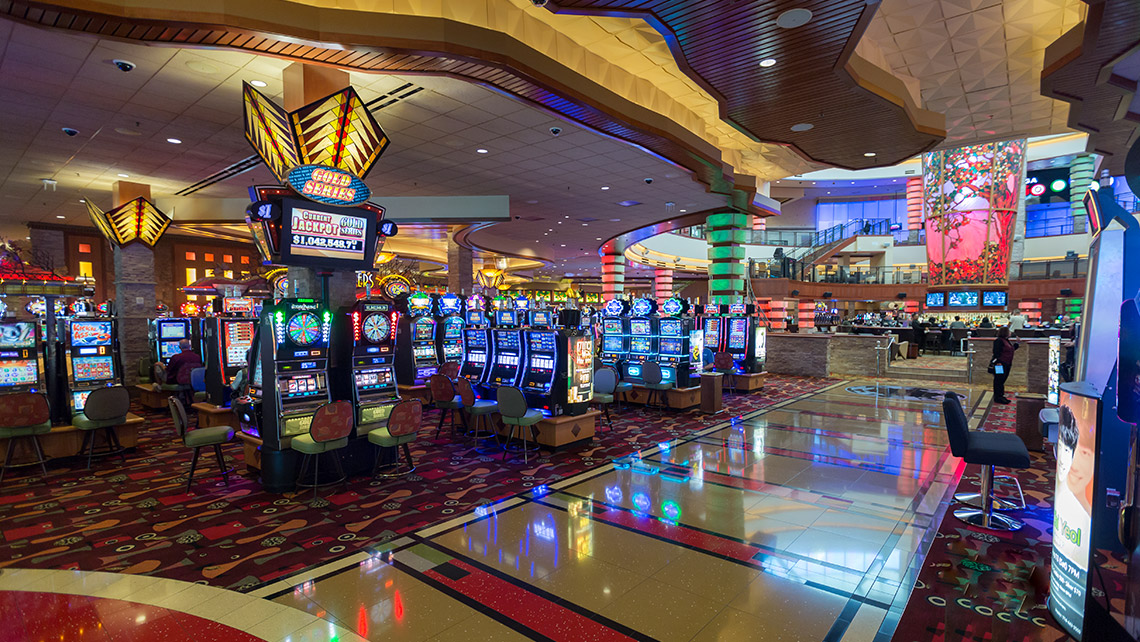
Pechanga Resort Casino gaming floor with slot machines and patterned carpet

Pechanga Resort Casino

Pechanga competes for discretionary time against every other entertainment option a household can choose from the sofa. Broad awareness buying reached people, but it could not prove which impressions moved anyone toward a booking, a visit, or a reservation inquiry.

01 Industry

Tourism & Destination Marketing. Advertising.

02 What we did

Pechanga competes for discretionary time against every other entertainment option a household can choose from the sofa. Broad awareness buying reached people, but it could not prove which impressions moved anyone toward a booking, a visit, or a reservation inquiry.

0M

Combined campaign impressions

Read the full case study
14Selected engagements

Proof, with the holdout shown.

View all case studies
In-N-Out Burger logo

Awareness was never the problem. The opportunity was proximity: making it effortless to find a nearby location at the exact moment of the decision. Most of those searches happened on a phone with immediate intent, someone wanting hours, directions, or the closest restaurant, not information about the brand.

Franchises | Advertising

7

High-intent local search patterns targeted

Franchises

Advertising

Read full story
In-N-Out Burger restaurant and neon sign at dusk

In-N-Out Burger

01 / 02

16Questions

Common questions.

  • What is Connected TV advertising?

    Connected TV advertising places video on internet-connected televisions through streaming services and devices. The viewing experience is television: full screen, sound on, usually unskippable. The buying and measurement are digital, which means specific households can be selected and the response to the ad can be traced rather than estimated.

  • How is CTV different from traditional television advertising?

    Broadcast buys a programme and a daypart, then estimates who saw it from panel data. CTV buys a household from real signals: your customer list, location, purchase behaviour, or the segments already converting. Frequency can be capped, existing customers can be excluded, creative can differ by segment, and the exposure can be connected to the site session and revenue that followed.

  • Which streaming platforms can campaigns run on?

    Hulu, Disney+, Peacock, Paramount+, Roku, Amazon Prime Video, YouTube TV, Samsung TV Plus, and Pluto TV, among others, bought through programmatic guaranteed deals, private marketplaces, or publisher direct. Platform selection follows where the audience actually watches and what the objective is, not availability.

  • Why does premium inventory matter?

    Low CPM CTV inventory is often not television at all. It is muted autoplay video, small screen placements, or made-for-advertising apps built to absorb budget. Premium publisher supply means a real living room screen, sound on, a completion rate that reflects genuine attention, and a transparent report of every app the ad ran in. We work from a named allow list rather than an open exchange.

  • When should an organization invest in CTV?

    When search and social are already capturing most available intent, when the category has thin search volume and demand has to be created, when a defined geographic footprint needs household coverage, or when an existing broadcast budget needs to become measurable. If profitable search demand is still unclaimed, that comes first and we will say so.

  • How is performance measured?

    Incremental site visits, branded search lift, assisted conversions, and modeled revenue contribution. Exposure is stitched to devices in the household so the view and the visit connect. Where the spend justifies it, we run geo holdouts, which turns the reported effect into a measured difference between exposed and unexposed markets rather than a platform claim.

  • How does CTV work with the rest of the advertising program?

    It sits at the top of the same funnel everything else feeds. CTV creates familiarity and lifts branded search that paid search then captures cheaply. Programmatic display and geofencing extend the message to households already exposed. Analytics reconciles the whole thing to one revenue number, so no channel is credited twice.

  • Do you produce the video creative?

    Yes, and we would rather build it for the format than adapt a broadcast spot. Length, pacing, and the end frame are written for a streaming audience and for the branded search or direct visit the spot is meant to cause. Where usable footage already exists, we will recut it before recommending a new production.

Next step

Let's find out whether CTV belongs in your plan

Share your footprint, your revenue definition, and what you are spending on video today. We will come back with the audience worth reaching, the inventory worth buying, and the measurement that has to exist first.

Connected TV engagements begin with audience and measurement design, agreed before inventory is committed.